Best Golf Tips for Senior Golfers – Expanded Guide
By Allen Pedersen
Whether you’ve been playing golf for decades or have only recently taken up the sport, being a senior golfer comes with its own set of challenges and opportunities. Aging can affect flexibility, strength, and stamina, but with the right approach, you can still perform at a high level and enjoy every round. Here’s an expanded version of the original three best tips for senior golfers, along with additional strategies to keep your game sharp and your enjoyment high. Best Golf Tips for Senior Golfers.
5 minutes read time
1. Prioritize Flexibility and Warm-Up Exercises
As we age, flexibility is essential for maintaining a consistent and powerful golf swing. Before starting your round, dedicate at least 10–15 minutes to warm-up exercises focused on the shoulders, hips, and back—key areas for generating rotational power.
Recommended Warm-Up Routine:
Shoulder rotations – to improve range of motion.
Hip hinges – to activate core and hip muscles.
Gentle back stretches – to protect the spine and improve posture.
Dynamic leg swings – to promote lower-body mobility.
Light club swings – to prepare your swing mechanics before the first tee shot.
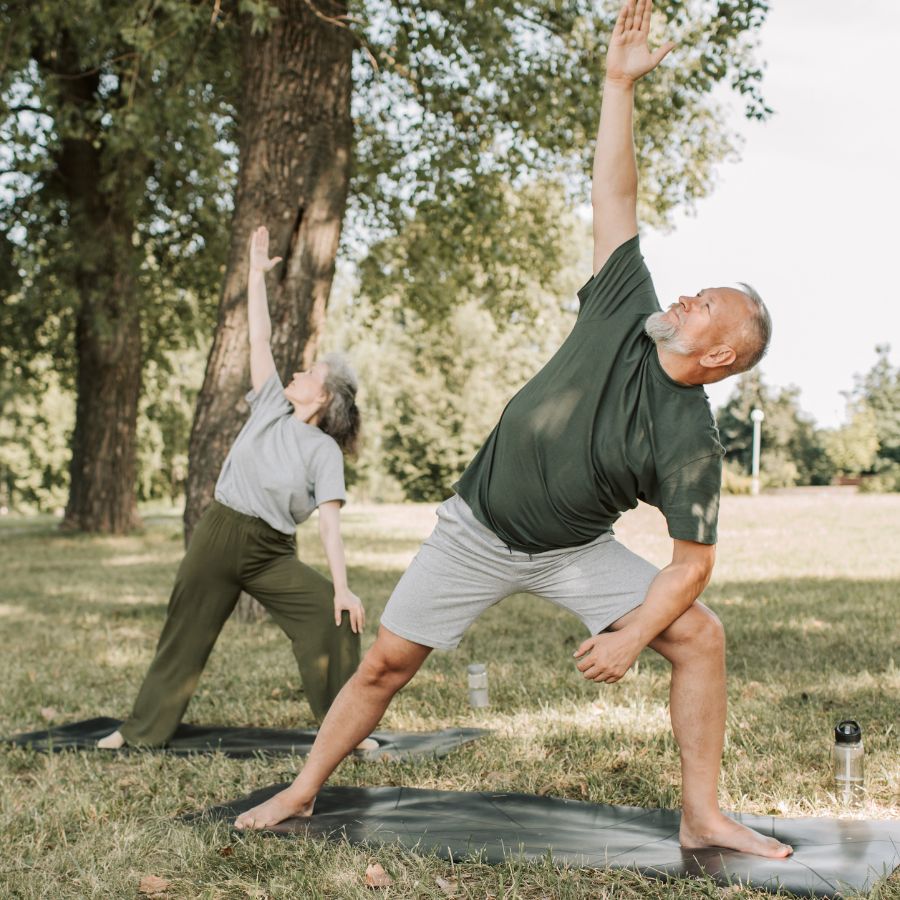
Off the course, consider adding flexibility-enhancing activities like yoga, Pilates, or tai chi, which also help with balance and coordination. These will improve your swing, prevent injuries, and enhance overall physical wellness.
Sponsored Links
We recommend consulting your physician before making any changes to your diet and exercise routine.
For effective shoulder rotations, stand tall with feet shoulder-width apart and hold a golf club across your chest or at arm’s length. Slowly rotate your shoulders in a circular motion, first forward for 8–10 reps, then backward for 8–10 reps, keeping movements smooth and controlled. You can also perform torso twists by rotating your upper body side to side while keeping hips stable, or arm circles with extended arms to target the entire shoulder joint. These exercises boost range of motion, warm up muscles used in the swing, and help prevent injuries.
2. Adjust Your Swing for Consistency and Efficiency
Senior golfers should adapt their swing to account for reduced clubhead speed or physical limitations. Rather than focusing solely on generating power, aim for:
Smooth tempo
Solid ball contact
Proper Body Alignment Swing Adjustments to Consider:
Slightly shorten your backswing to maintain balance and control.
Focus on a controlled downswing for better accuracy.
Use more body rotation and less reliance on the wrists to generate speed.
Work with a PGA professional who understands senior players’ needs.
Remember—quality of movement matters more than swing length.
As distance off the tee decreases with age, accurate shots and smart course management become essential. Develop a game plan that plays to your strengths:
Choose safer targets to avoid hazards.
Position yourself for easier approach shots.
Consider using GPS or rangefinders for precise yardages.
A smart strategy reduces both mental and physical fatigue and can improve scoring without needing longer drives.
AI golf instruction is becoming one of the newest ways golfers can use artificial intelligence to improve their game. AI can already write an email, plan a vacation, answer questions, analyze photographs—and now it can even analyze your golf swing. But can it actually help you play better golf? That was the question I wanted…
How Tee Height and Ball Position Can Help Senior Golfers Launch It Higher, Find the Center of the Face, and Get More From Their Driver One of the easiest ways for senior golfers to gain more from the driver is to check driver tee height for senior golfers and ball position before making another swing…
Sometimes the best golf memories aren’t made on the golf course—they’re made afterward. 2-night golf getaways for senior golfers are one of the best ways to enjoy great golf, reconnect with friends, and recharge without spending a week away from home. Sometimes, the best golf memories aren’t made by shooting your lowest score—they’re made around…
Summer is one of the best times of the year to play golf. The days are longer, courses are in great condition, and many of us are playing two or three times a week—or even more. But there’s one mistake I see senior golfers make over and over again every summer. It’s not swinging too…
A Senior Golfer’s Guide to Enjoying the Game Again. Golf confidence after 60 can disappear faster than most golfers expect. One day you’re standing over the ball feeling relaxed and confident, and the next you’re questioning your swing, your equipment, and even whether you can still play the game you love. If you’ve been struggling…
There are few things more frustrating than standing on the first tee knowing you used to play better than you are playing now. One month you’re shooting in the low 80s. The next month you’re struggling to break 95. Drives that used to find the fairway now disappear into the trees. Iron shots feel heavy…
Maintaining mental well-being on the course begins with adopting a balanced perspective—viewing golf as both a challenge and an enjoyable pastime, rather than a high-pressure performance. Accept that mistakes are part of the game, and treat each bad shot as a learning opportunity instead of a setback.
Strategies to support a positive mindset include focusing on the present shot rather than dwelling on past errors or worrying about future holes, practicing controlled breathing to reduce tension, and setting process-based goals such as making solid contact rather than purely score-based targets.
Engaging with playing partners socially, appreciating the outdoor environment, and celebrating small successes—like a well-executed chip or a good read on a putt—can also help maintain mental resilience and enjoyment throughout the round.
Suitable strength training exercises for senior golfers include bodyweight or light resistance movements that target golf-specific muscles while minimizing joint stress. Examples include:
Squats or chair squats to strengthen legs and improve stability.
Resistance band rows for upper back and posture support during the swing.
Dumbbell shoulder presses with light weights to maintain shoulder strength and mobility.
Standing woodchoppers with a resistance band or cable to build rotational core power.
Glute bridges to strengthen hips and lower back for better swing balance.
Planks (standard or modified) to enhance core endurance, which supports consistent swing mechanics.
These exercises, performed 2–3 times per week with proper form, can improve strength, stability, and power without overloading joints.
7. Keep the Fun in the Game
At its heart, golf is a social, enjoyable sport. Laugh, share stories, and focus on the fact that you’re active, outdoors, and challenging yourself—regardless of score.
Final Takeaway: By staying flexible, adapting your swing, playing smart, and optimizing equipment, senior golfers can maintain high performance while enjoying the game for years to come. Integrating these strategies into your play will help you maximize both success and satisfaction on the course.
Grab your clubs, embrace these tips, and savor every shot!
Allen is a seasoned golfer who has been playing the sport for over 50 years, mostly in the Northwest, and now calls Idaho home. Throughout his life, he has actively participated in various sports, including snowboarding and windsurfing in the Columbia Gorge. Allen passionately believes that “Golf is Life” and is dedicated to helping fellow senior golfers make the most of their senior years