Join Our Senior Golfers Newsletter!
Sign up today and receive your free Golf After 60 Bonus Stretch Guide!

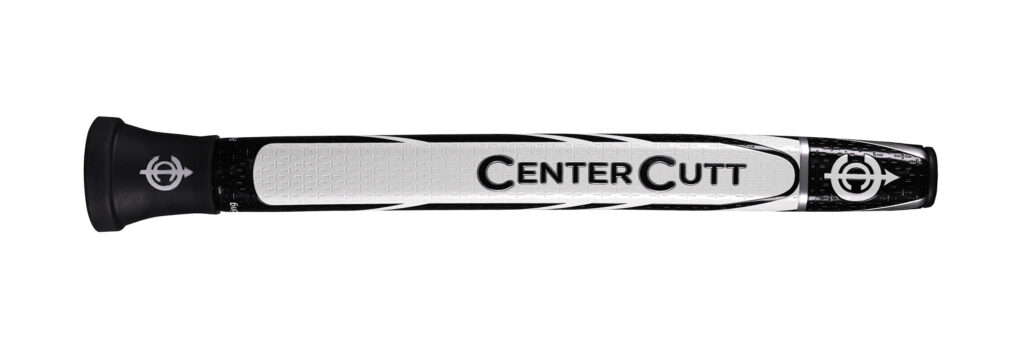
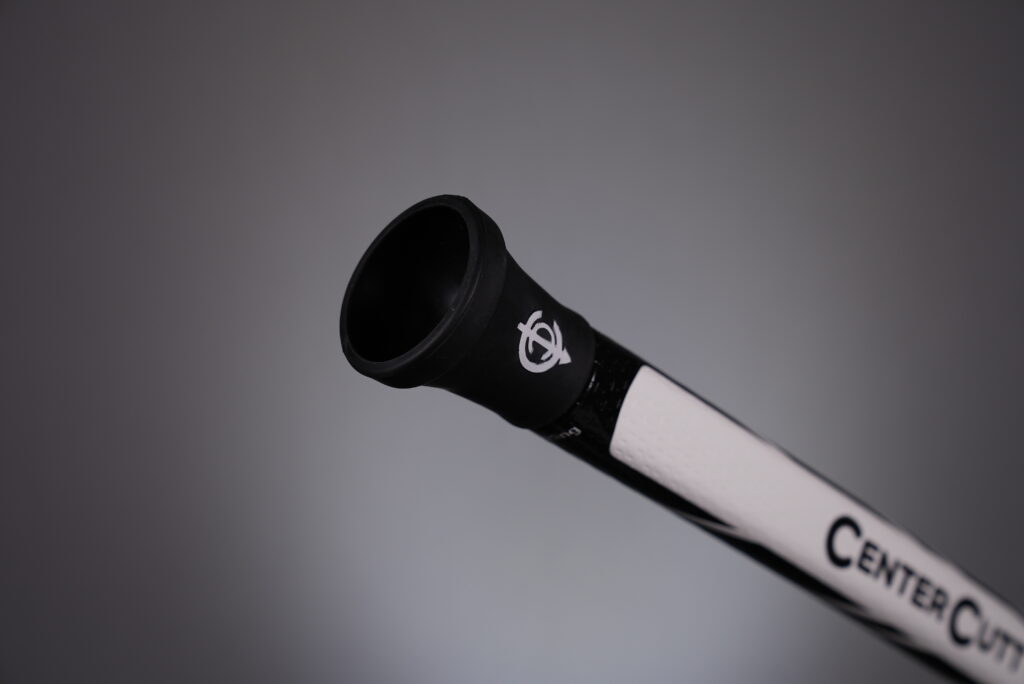
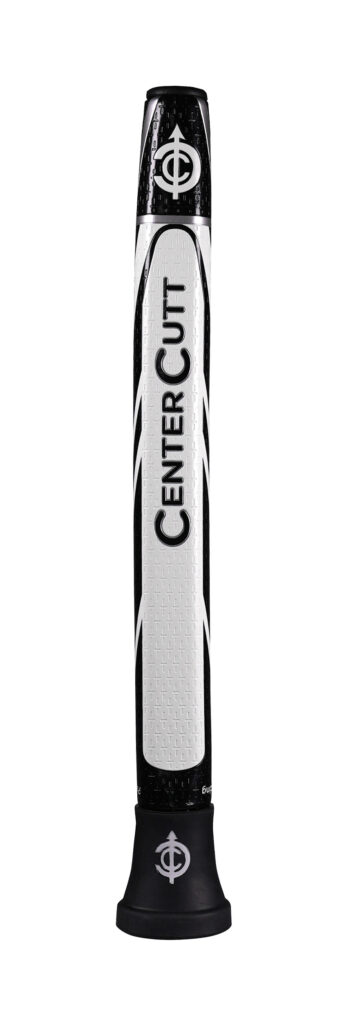
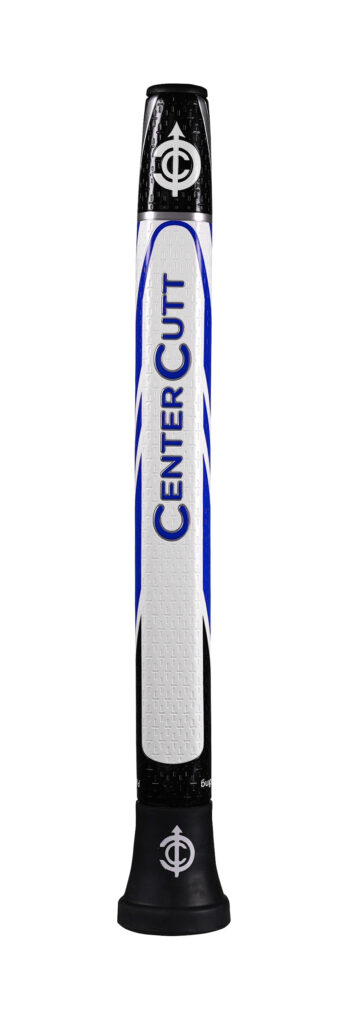
In the world of golf, every aspect contributes to a player’s success on the course. From swing mechanics to mental fortitude, golfers are constantly seeking ways to improve their game. Amidst the various components that impact performance, one often-overlooked element stands out—the putter grip. Often dismissed as a mere accessory, the putter grip holds immense importance in cultivating a golfer’s connection to the putter. Understanding its significance can revolutionize your golfing experience and elevate your performance on the greens. During the 2024 PGA Show, we discovered the Center Cutt putting grip, which is an excellent product for senior golfers.
The Best Unique Putting Grip For Senior Golfers
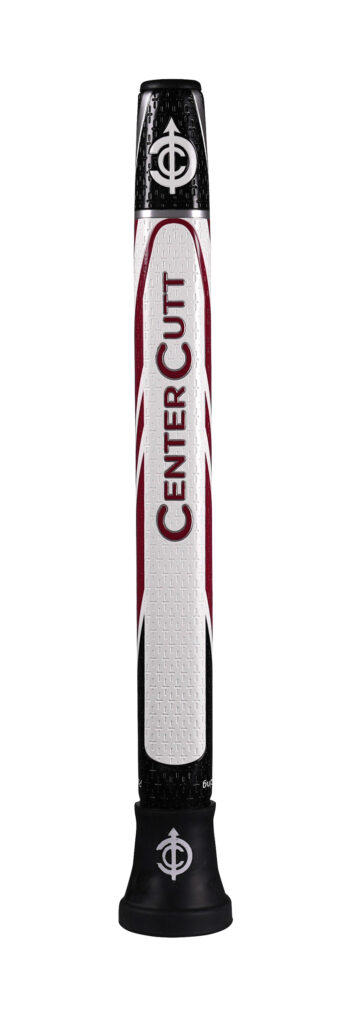
Why is a putting grip important?
Establishing Stability for Accuracy:
The putter grip forms the fundamental link between a golfer’s hands and the putter. Its material, size, shape, and texture all contribute to the golfer’s feel and touch during the stroke. By selecting a grip that suits your hand size and shape, combined with the appropriate texture, you establish a stable foundation for consistent and controlled putting strokes. This synergy offers the necessary stability for executing accurate putts, resulting in lower scores and improved performance on the greens.
Enhancing Sensory Perception and Feedback:
Beyond providing stability, a quality putter grip enriches the golfer’s sensory experience by transmitting essential feedback from the clubface to their hands. The grip’s material plays a crucial role in delivering this information. A soft and responsive grip can relay subtle vibrations and feedback, allowing golfers to make necessary adjustments for better control and increased confidence on every putt. In addition, the design and pattern of the grip contribute to the golfer’s perception, enabling them to become acutely aware of subtle nuances in their strokes. This heightened sensitivity enhances their ability to read the greens, make precise judgments, and roll the ball smoothly towards the target.

Combatting Tension and Fostering Consistency:
Tension is a golfer’s worst enemy when it comes to executing a smooth and fluid putting stroke. A well-designed putter grip, tailored to individual preferences, can alleviate tension and promote a relaxed grip, thereby fostering consistency and confidence on the greens. By reducing tension and encouraging a natural grip pressure, golfers are more likely to avoid jerky movements and unwanted manipulations during their stroke. With a relaxed grip, golfers can maintain a consistent tempo and rhythm, resulting in a smoother and more accurate putting motion. The ability to trust the grip to counterbalance tension allows golfers to execute putts with greater ease and finesse, improving their overall putting performance.
Customization for Personal Preference:
One of the most alluring aspects of a putter grip lies in its abundance of customization options, catering to individual preferences. The market offers an extensive selection of grips with different sizes, shapes, materials, and textures. This variety empowers golfers to experiment and find the grip that harmonizes best with their unique hand size, grip style, and putting stroke characteristics. The opportunity to discover a personalized grip instills confidence, promotes a sense of ownership, and encourages golfers to take control of their putting strokes. Customization elevates the player’s connection to their putter, making them feel more comfortable, confident, and ultimately leading to improved performance on the greens.
Evolution and Innovation:
Innovation is a driving force in the world of golf, and the putter grip is no exception. With advancements in materials, manufacturing techniques, and design concepts, today’s putter grips offer unprecedented levels of performance, comfort, and customization. From oversized grips to counterbalanced grips to adjustable grips, golfers have access to a wealth of options that cater to their specific preferences and playing styles. As technology continues to evolve, the putter grip remains at the forefront of innovation, pushing the boundaries of what’s possible and redefining the art and science of putting.
In conclusion, while often overshadowed by other aspects of the game, the putter grip plays a pivotal role in a golfer’s success on the green. From establishing stability and accuracy through a solid foundation to enhancing sensory perception and providing essential feedback, its influence cannot be underestimated. Moreover, by combating tension and promoting consistency, a well-chosen putter grip positively impacts a golfer’s confidence and overall performance. With the exciting range of customization options available, every golfer has the opportunity to find a grip that enhances their putting game and maximizes their potential on the greens. So, next time you step onto the putting surface, remember the hidden power of a putter grip—embrace its enigmatic influence and watch your golfing prowess soar to new heights.
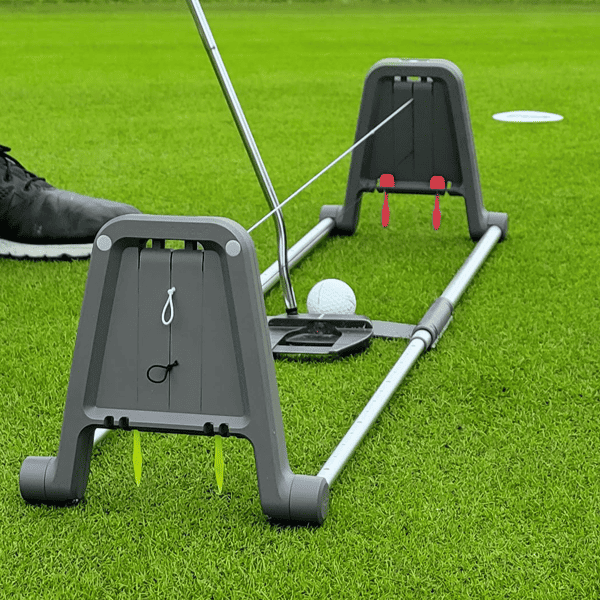
The PUR Truth Trainer main feature lies in its immediate and accurate feedback system. The inclusion of gates and targets provides clear indications of the trajectory and accuracy of your putts. This real-time feedback is invaluable for senior golfers looking to correct mistakes promptly and make incremental improvements with each practice session.
Apply the coupon code on the PUR website when you’re in the cart.
Most golf shops and retailers offer regripping services. They typically charge on a per club basis, with the majority charging less than $5.00 per club.
How to Replace Your Golf Club Grips: Do It Yourself.
Replacing golf grips is an essential maintenance task for golfers to ensure optimal performance and comfort during play. While it might seem daunting at first, the process is relatively straightforward and can be completed with the right tools and a bit of patience. Below is a comprehensive guide on how to replace your golf grips, along with some tips to make the process smoother:
Replacing your golf grips is a simple yet important task that can have a significant impact on your performance and enjoyment of the game. By following these steps and taking your time to do the job properly, you can ensure that your clubs are equipped with grips that provide the comfort, control, and confidence you need to play your best on the course.

Putting Drills & Tips Golf Lessons For The Flat Stick by Golf Distillery
In this section of the site, we’ll focus on what I truly believe is the most important club in the bag… the putter.
The putting tips and lessons below cover good putting fundamentals such as alignment and stance, the putting stroke, the putting grip, reading greens and distance control.
I’ve also included some putting drills and games so that you can make the most of your time when you practice putting.

How Many Putts Do You Take?
I don’t think most golfers appreciate just how many shots they are throwing away with their putter. If you want to better your scores on the golf course and lower your handicap as quickly as possible – improve your putting.
The distance from the hole for your first putt is always determined by the quality of your approach.
Sure, you will sometimes be able to put your ball within 10 feet for a real chance at birdie. But more often than not you will be faced with putt distances where the odds are against you. Instead of going for it every time it may be best to take your medicine and protect your par from a three-putt bogey rather than going for the one-putt birdie.
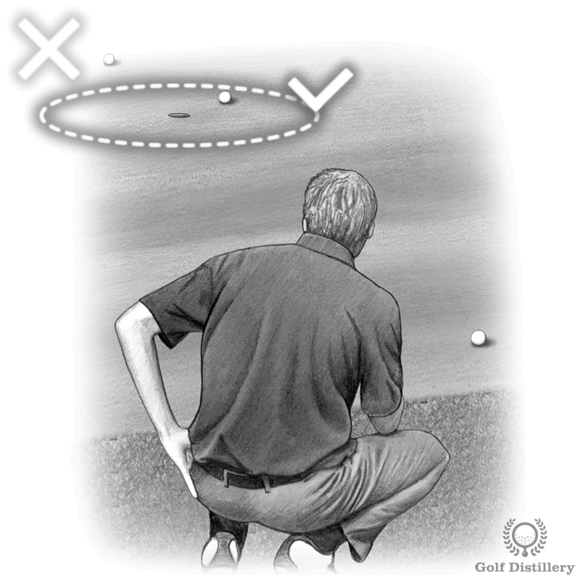
Follow these steps to practice your lag putting:
Target the Very Center of the Cup Drill
Harvey Penick used to say that golfers should take dead aim. While he may have been talking about golf shots using longer clubs and full swings that saying can certainly also apply to putting.
Indeed, rather than aiming at the general direction of the hole it can be quite useful to aim at the very center of the hole. That way, missing that very precise target can still result in holed putts.
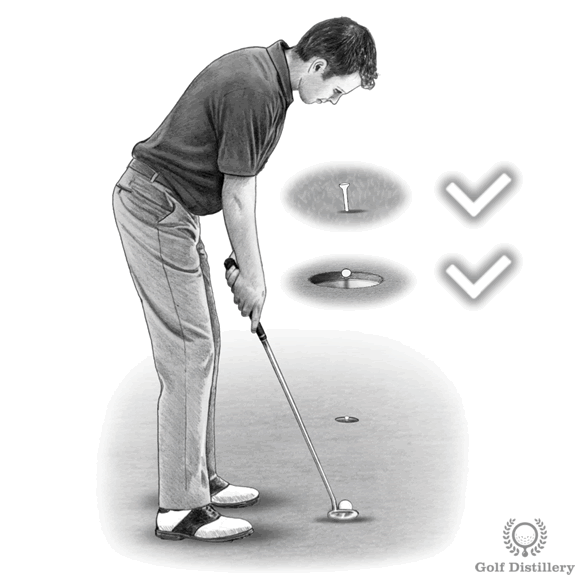
Follow these steps in order to make a precise target in the middle of the hole:
If you want to make sure not to damage the inside of the cup as prescribed or if there is a hard plastic liner preventing you from doing so there is an easy alternative.
Indeed, practice your putting as you normally would on the putting green but instead of aiming at the holes simply aim at a tee (or tees) that you previously inserted into the ground. Imagine that you must hit the tee in order for the putt to count as made. Any putt that missed the tee can be deemed not to fall in.
Performing this putting drill will train you to focus and aim at a very specific target.
This is in contrast to aiming at the general direction of the hole. Picking a smaller target will get you to really apply yourself to make sure you hit a great putt and that the line you picked was the correct one.
And best of all, when you take that focus onto the golf course and when you miss that small target your putts may still fall into the hole nonetheless.