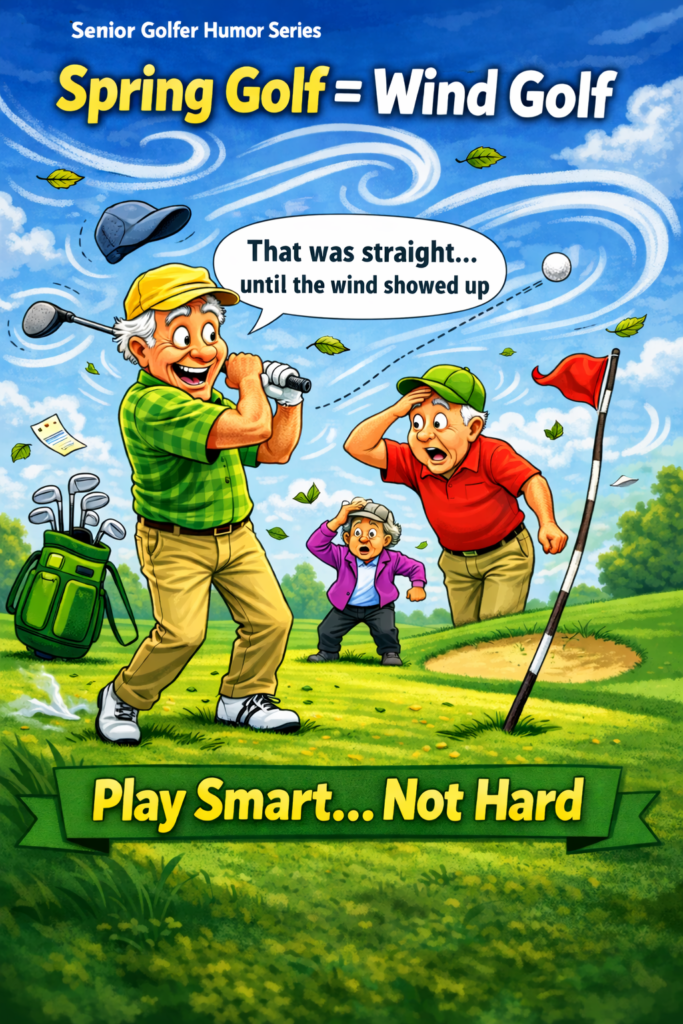
Playing golf in the wind for seniors can be one of the biggest challenges on the course—especially during those gusty spring rounds when it feels like every shot has a mind of its own.
If you’ve ever stood over the ball, made what felt like a perfect swing… only to watch it drift way off line, you’re not alone. The truth is, wind affects senior golfers differently. With slightly higher ball flight and less spin control, even a solid shot can quickly turn into a guessing game.
But here’s the good news…
You don’t need more power to play better in the wind—you need a smarter setup and a more controlled swing.
In this guide, you’ll learn simple, senior-friendly adjustments to your setup and swing that will help you:
Keep the ball lower
Control your distance
Stay balanced in gusty conditions
And score better—even when the wind picks up
Because when you learn how to play golf in the wind the right way, it stops being frustrating… and starts becoming an advantage. Start playing Golf in the Wind for Seniors.
7 minutes read time
🟨 Senior Insight:
Wind is not your enemy—it’s just another course condition. The goal isn’t to beat it… it’s to play with it.
At Senior-Golfers.com, we focus specifically on how the golf swing, equipment, and practice change after 60. If you’re looking for senior-friendly golf advice, start here.
Wind affects putting more than people think—especially on exposed greens.
Watch for:
Ball wobble at address
Gusts during the stroke
Tips:
Take a slightly firmer stroke
Keep your lower body stable
Don’t rush—wait for a lull if needed
8. Choose the Right Tee Time
If you have flexibility, this is a hidden advantage.
Early morning: Usually calmer
Afternoon: Wind often picks up
For senior golfers, this alone can save: 👉 3–5 shots per round
9. Tee Shot Strategy in the Wind
Driver isn’t always your best option.
Into the wind:
Consider 3-wood or hybrid
Focus on keeping it in play
Downwind:
Let it fly—but stay controlled
Crosswind:
Aim for the wider part of the fairway
10. Embrace “Boring Golf”
This is where experienced golfers shine.
In windy conditions:
Avoid hero shots
Play to safe targets
Take your medicine when needed
🟨 Senior Insight:
Wind rewards discipline—not talent.
Final Thoughts: Play Smart, Not Hard
Spring wind doesn’t have to ruin your round—it can actually improve your course management.
If you:
Club up
Swing easier
Keep the ball lower
Stay patient
You’ll start beating players who are trying to overpower the conditions.
And here’s the best part…
When the wind dies down on a calm summer day?
You’ll feel like you’re playing a completely different (and easier) game.
Bonus: Quick Wind Checklist (Before Every Shot)
✔️ Where is the safest miss?
✔️ What is the wind direction?
✔️ Do I need more club?
✔️ Can I swing easier?
👉 “Below are answers to common questions about playing golf in the wind for seniors.”
❓ FAQ: Playing Golf in the Wind (For Senior Golfers)
1. How do you hit a golf ball in the wind as a senior golfer?
The best way is to club up and swing easier. Instead of swinging harder, use more club and make a smooth, controlled swing. This keeps the ball flight lower and more stable in the wind.
2. Should I swing harder into the wind?
No—this is one of the biggest mistakes golfers make. Swinging harder adds spin and height, which makes the wind affect the ball even more. A smooth, controlled swing is much more effective.
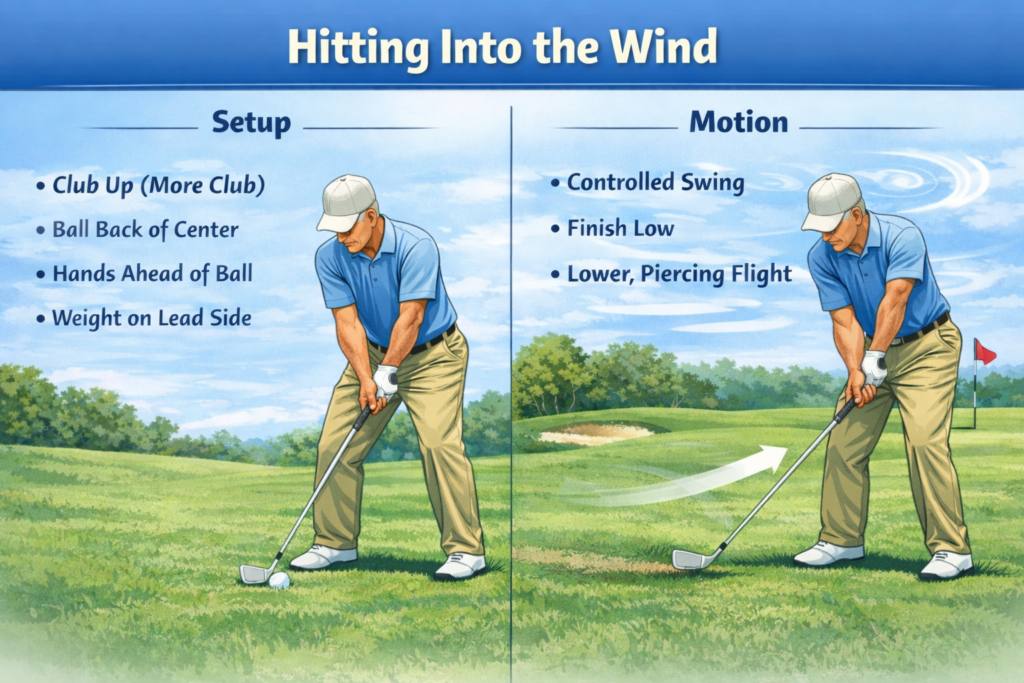
3. How do you keep the ball low in windy conditions?
To hit a lower shot:
Move the ball slightly back in your stance
Keep your hands slightly ahead at impact
Finish with a shorter, lower follow-through
This helps reduce trajectory and keeps the ball under the wind.
4. What is the best club to use in strong winds?
It depends on the shot, but generally:
Use more club than normal
Consider hybrids or fairway woods for control
Avoid forcing driver into strong headwinds
Control is more important than distance.
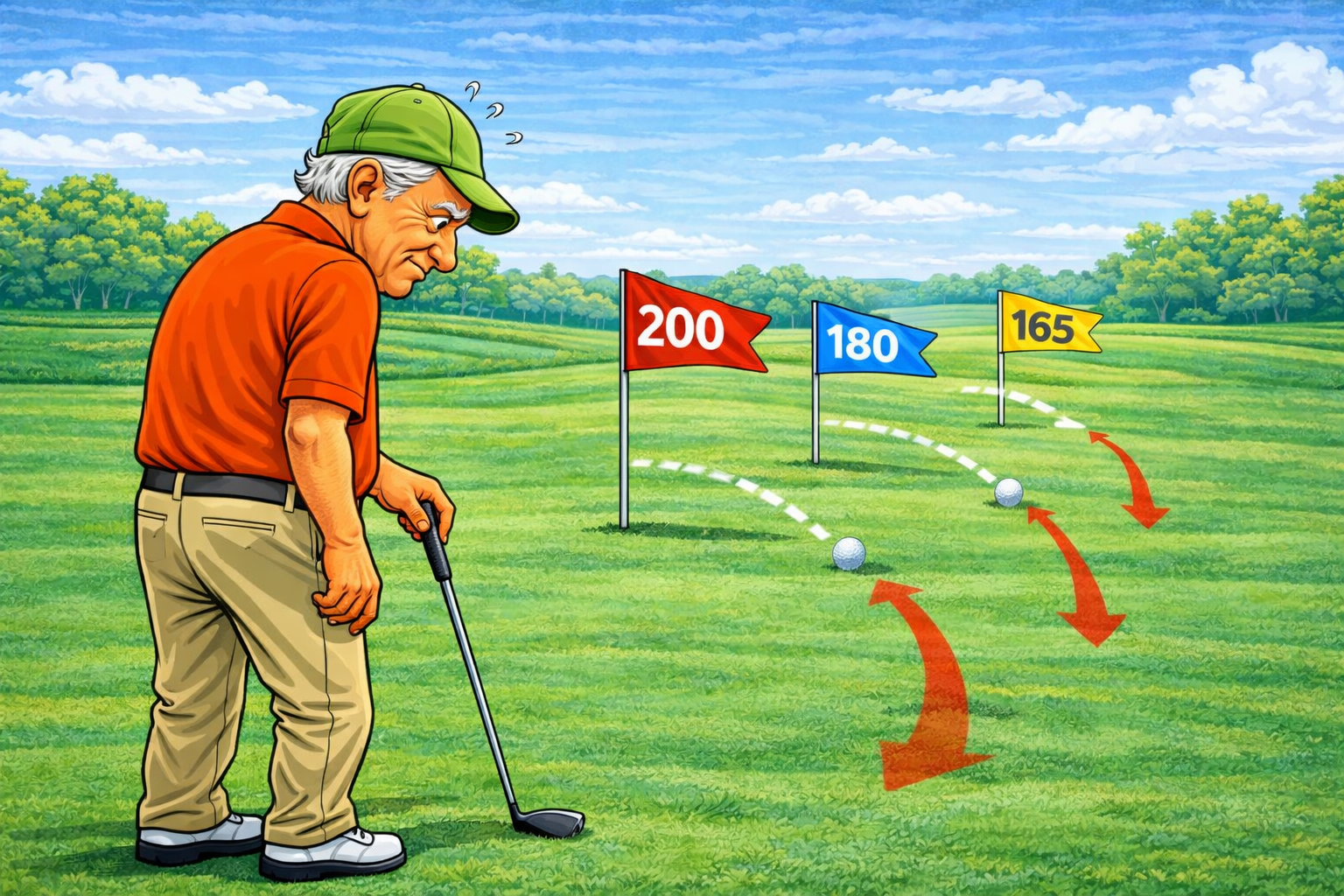
5. How much distance does wind affect a golf shot?
Wind can significantly change distance:
Into the wind: ball can lose 10–30 yards
Downwind: ball can travel 10–40 yards farther
Crosswind: can push the ball far offline
The stronger the wind and higher the ball flight, the more impact it has.
6. How should senior golfers aim in crosswinds?
Instead of fighting the wind, aim into it and let it bring the ball back. For example:
Wind left to right → aim left
Wind right to left → aim right
Think of the wind like a slope on the green.
7. Is putting affected by the wind?
Yes—especially on exposed greens. Wind can:
Move the ball slightly
Affect your balance during the stroke
Use a firmer, more stable stroke and wait for a lull if possible.
8. What is the best tee time to avoid wind?
Typically:
Early morning = calmer conditions
Afternoon = stronger winds
Choosing the right tee time can save several strokes.
9. How can senior golfers stay balanced in the wind?
Use a slightly wider stance and stay centered during your swing. This helps maintain balance and prevents swaying in gusty conditions.
10. What is the biggest mistake golfers make in the wind?
Trying to fight the wind instead of playing with it. This leads to:
Over-swinging
Poor contact
Bigger misses
Smart course management always beats power in windy conditions.
🔔 Get My Free Senior Stretch Guide Join the Senior-Golfers.com Newsletter and get practical advice, equipment insights, and bonus guides delivered monthly — no spam.
If you’re losing distance after 60, the good news is you may be able to get much of it back without swinging harder. One day your 7-iron is carrying a comfortable number. A season or two later, you’re reaching for one more club and wondering where the yardage went. If that sounds familiar, you’re not…
The golf cart rule most golfers forget is simple, but ignoring it can lead to accidents, damaged golf carts, and even costly repairs on the course. At Senior-Golfers.com, we focus specifically on how the golf swing, equipment, and practice change after 60. If you’re looking for senior-friendly golf advice, start here. Golf carts make the…
Why the Right Compression Ball Can Add Distance and Control for Senior Golfers At Senior-Golfers.com, we focus specifically on how the golf swing, equipment, and practice change after 60. If you’re looking for senior-friendly golf advice, start here. 9 minutes read time Just want the quick answer? ⭐ Quick Summary: Best Golf Balls for Senior…
Allen is a seasoned golfer who has been playing the sport for over 50 years, mostly in the Northwest, and now calls Idaho home. Throughout his life, he has actively participated in various sports, including snowboarding and windsurfing in the Columbia Gorge. Allen passionately believes that “Golf is Life” and is dedicated to helping fellow senior golfers make the most of their senior years
Allen Pedersen
Playing Golf in the Wind for Seniors: Simple Setup & Swing Guide
Playing Golf in the Wind for Seniors: Simple Setup & Swing Guide
Playing Golf in the Wind for Seniors: Simple Setup & Swing Guide
Playing Golf in the Wind for Seniors: Simple Setup & Swing Guide
Playing Golf in the Wind for Seniors: Simple Setup & Swing Guide
Playing Golf in the Wind for Seniors: Simple Setup & Swing Guide
Playing Golf in the Wind for Seniors: Simple Setup & Swing Guide





Comments