Playing at a New Golf Course: and How to Avoid Looking Foolish
By Allen Pedersen
Playing at a New Golf Course.
Stepping onto a new golf course can be both exciting and intimidating, especially if you are concerned about leaving a good impression. By adhering to a few crucial rules of etiquette, preparation tips, and practical advice, you can ensure that your debut at any golf course will go smoothly and confidently. Here’s a comprehensive guide on what to do to avoid looking foolish when playing at a new golf course.
Sponsored Links
6 minutes read time.
1. Do Your Research Before Arrival
Before heading to the course, spend some time researching its layout, rules, and culture:
Check the course website: Look for the dress code, tee time policies, and any unique local rules.
Familiarize yourself with the layout: Many courses have online maps or apps to help you understand the fairways, hazards, and greens.
Understand local rules: Some courses have specific rules, such as preferred lies or restrictions on where carts can be driven .
By knowing what to expect, you’ll arrive prepared and confident.
2. Punctuality Is Key
Golf values respect for time. Always arrive at least 30 minutes before your tee time. This allows:
Ample time to check in at the pro shop.
Time to warm up at the driving range or practice green.
A chance to meet your playing partners and get comfortable with the surroundings .
Being rushed can unsettle your game and leave a poor impression on others.
Sponsored Links
3. Dress the Part
Proper attire shows respect for the course and the sport. While the dress code can vary, most courses expect:
Collared shirts and golf slacks or shorts: Denim, gym wear, and T-shirts are usually discouraged.
Golf shoes: Non-metal cleats are favored to preserve the greens.
Weather-appropriate gear: A hat or visor is helpful for sun protection, while a light sweater may be useful for cooler mornings .
Never assume – check the course’s dress policy to avoid any awkward situations.
4. Warm-Up Smartly and Efficiently
Before you begin your round:
Use the driving range to loosen up your swing but be mindful of not monopolizing a spot during busy periods.
Work on putting or chipping at the practice greens to get a feel for the speed of the greens.
Avoid trying to ‘fix’ your swing right before starting. Focus on feeling confident with your consistency.
5. Understand the Pace of Play
Maintaining pace is essential to avoid frustration among fellow golfers. Tips for keeping up include:
Sponsored Links
Play ready golf: Be prepared for your shot while others are hitting theirs.
Limit practice swings: Two or three practice swings are sufficient.
Keep searching brief: Spend no more than 3 minutes searching for lost balls.
If you’re falling behind, let faster groups play through; this courtesy is always appreciated.
6. Show Respect on the Course
Respect for the game, your fellow players, and the course itself is paramount. Key points to remember include:
Be silent during others’ swings: Avoid moving, talking, or making noise when someone else is hitting.
Watch where you stand: Stay out of another player’s line of sight or putting line on the greens.
Repair your marks: Fix divots, rake bunkers, and use sand bottles provided for fairway damage.
Avoid damaging greens: Do not drag your feet, drop clubs, or use putter shafts to retrieve balls.
Small gestures like these demonstrate your respect for the course and fellow golfers.
The golf cart rule most golfers forget is simple, but ignoring it can lead to accidents, damaged golf carts, and even costly repairs on the course. At Senior-Golfers.com, we focus specifically on how the golf swing, equipment, and practice change after 60. If you’re looking for senior-friendly golf advice, start here. Golf carts make the…
Why the Right Compression Ball Can Add Distance and Control for Senior Golfers At Senior-Golfers.com, we focus specifically on how the golf swing, equipment, and practice change after 60. If you’re looking for senior-friendly golf advice, start here. 9 minutes read time Just want the quick answer? ⭐ Quick Summary: Best Golf Balls for Senior…
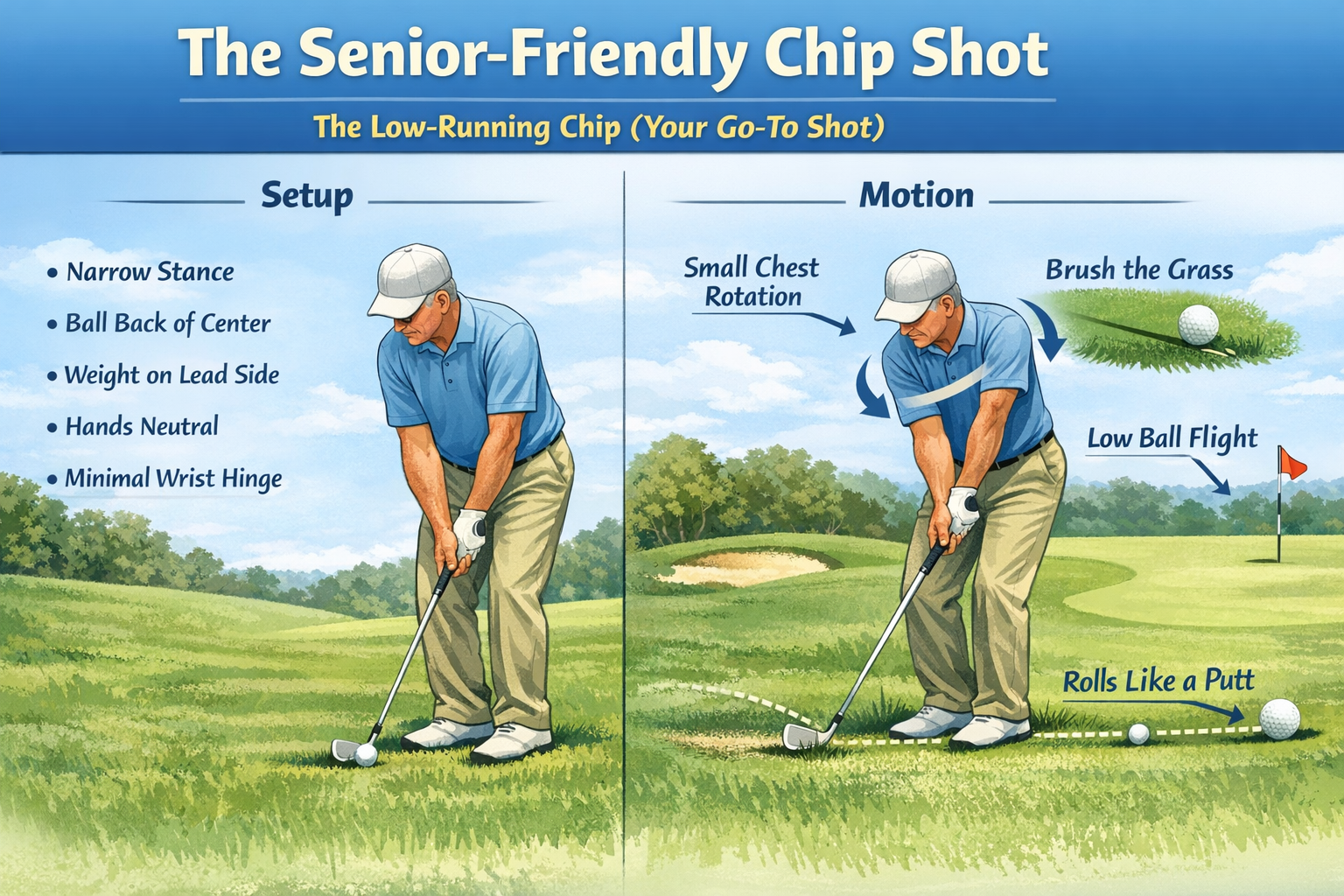
If there’s one part of golf that truly belongs to experienced players, it’s the short game for seniors. After 60, we may lose a little swing speed. We may not hit it as far as we once did. But scoring? Scoring still belongs to the golfer who controls the ball from 100 yards and in.…
The shoulder turn in golf is a crucial component of a successful golf swing. It is a fundamental movement that allows golfers to generate power, maintain accuracy, and achieve optimal distance. While it may seem simple, mastering the shoulder turn can be challenging, especially for senior golfers. In this post, we will explore some tips…
There’s a moment that happens to almost every golfer over 60. You’re on the range.You make a swing.And you think: “That didn’t used to feel this hard.” Not painful.Not broken. Just… harder. At Senior-Golfers.com, we focus specifically on how the golf swing, equipment, and practice change after 60. If you’re looking for senior-friendly golf advice,…
At Senior-Golfers.com, we focus specifically on how the golf swing, equipment, and practice change after 60. If you’re looking for senior-friendly golf advice, start here. YouTube golf tips can be a great resource — but for golfers over 60 they often create frustration instead of improvement. If you’ve ever watched a video, tried it at…
Carry multiple tees and a ball marker: These small items come in handy and show you’re prepared.
Mark your ball clearly: It helps avoid confusion or delays.
Avoid slow-play bottlenecks: Don’t linger unnecessarily around greens or tee boxes.
Follow the “honors system” on the tee box but don’t be overly rigid if others defer to ready golf.
10. Keep Score Honestly
Golf relies heavily on self-regulation and integrity. Always record your strokes accurately. If you’re practicing or adjusting rules for fun, communicate this clearly with your group to avoid misunderstandings.
11. Appreciate the Staff
Treat course staff courteously, from the pro shop to the grounds crew:
Greet staff warmly upon arrival and thank them after your round.
If there’s a starter or marshal, follow their instructions closely.
Tipping appropriately, especially if you’re using a caddie or receiving exceptional service, is a good practice.
12. Adapting to Challenges of a New Course
Every golf course is unique. Stay flexible and adapt to its quirks:
Study course conditions: Check weather, wind direction, and ground firmness, which can affect your shot selection.
Play conservatively: If unsure about the course, prioritize accuracy over distance to avoid hazards.
Ask for advice: Fellow players or staff can provide insight into tricky holes or local nuances.
13. Stay Positive and Confident
Golf is a challenging game, even for seasoned players:
Don’t dwell on mistakes; instead, focus on enjoying the round.
Avoid showing frustration excessively through angry outbursts or equipment abuse.
Celebrate small achievements, like a great drive or a solid putt.
14. Post-Round Etiquette
Once the game is over:
Shake hands with your playing partners (or fist-bump if preferred).
Settle any bets or agreements promptly.
Take time to reflect and appreciate the day, regardless of performance.
Consider visiting the clubhouse for a drink or snack—it’s a great way to wrap up the experience.
Let’s say this again! It is recommended to arrive at least 30 minutes before your tee time at a new course. This allows adequate time to check in at the pro shop, warm up at the driving range or practice green, and familiarize yourself with the course and your playing partners, ensuring a smooth and confident start .
Summary
Playing a round at a new golf course is an opportunity to showcase respect, skill, and adaptability. By preparing beforehand and observing proper etiquette on and off the course, you can confidently avoid looking foolish. Golf is ultimately about having fun, so remember to focus on the joy of the game and the camaraderie with your playing partners.
By following these tips, you can ensure your debut at a new course will be both memorable and enjoyable for all the right reasons. Happy golfing!
Allen is a seasoned golfer who has been playing the sport for over 50 years, mostly in the Northwest, and now calls Idaho home. Throughout his life, he has actively participated in various sports, including snowboarding and windsurfing in the Columbia Gorge. Allen passionately believes that “Golf is Life” and is dedicated to helping fellow senior golfers make the most of their senior years.