If you’re losing distance after 60, the good news is you may be able to get much of it back without swinging harder.
One day your 7-iron is carrying a comfortable number. A season or two later, you’re reaching for one more club and wondering where the yardage went. If that sounds familiar, you’re not alone. Most older golfers lose distance gradually, then suddenly feel like they’ve lost a club or two all at once.
Sponsored Links
9-minute read
The good news is this: distance loss after 60 is common, but a lot of it is fixable. And no, the answer is not swinging out of your shoes and hoping your lower back sends a thank-you note.
In many cases, senior golfers can get back 10 to 15 yards by improving rotation, contact, sequencing, and equipment fit. That means more distance with less strain, which is a pretty good trade for the over-60 crowd.
If you’ve been wondering why the ball isn’t going as far as it used to, here’s what’s really going on—and what to do about it.
Most golfers assume distance disappears for one reason: age.
Sponsored Links
Age matters, of course. You’re probably not as flexible at 67 as you were at 47. But the real problem usually comes from a combination of smaller issues that add up over time.
Here are the most common reasons distance starts to disappear after 60:
1. You’re Not Turning as Much
This is a big one.
As golfers get older, the body naturally gets tighter. Hips lose mobility. The upper back doesn’t rotate as easily. Shoulders get stiffer. That means your backswing gets shorter, even if it still feels “full” to you.
Sponsored Links
Less turn usually means:
a shorter swing arc
less stored energy
lower clubhead speed
less distance
A lot of senior golfers are not weak. They just aren’t turning enough to create speed.
2. Your Arms Are Beating Your Body
This is another common distance killer.
When the lower body slows down or the chest stops rotating through the ball, the arms take over. That creates a swing that feels quick but produces weak contact. The club gets thrown from the top, the sequence falls apart, and the strike gets worse.
That often leads to:
thin shots
glancing blows
weak fades
loss of compression
shorter carries
If your arms are outrunning your body, you’re giving away distance before the club even reaches the ball.
3. You’re Trying to Hit It Harder
This is the trap.
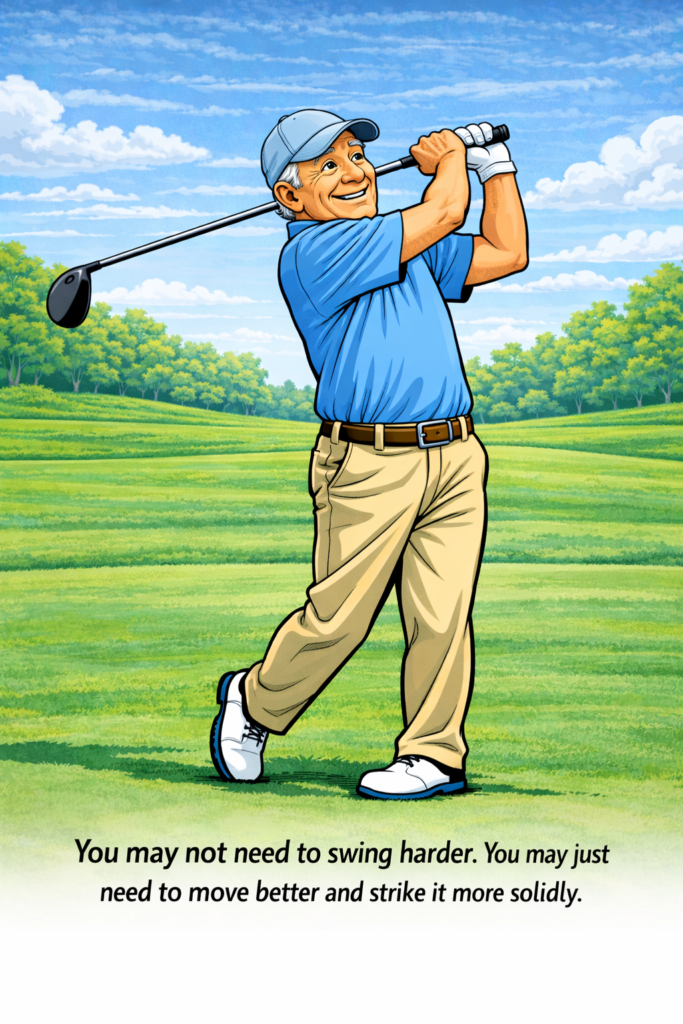
Once you feel distance slipping away, the temptation is to swing harder. Unfortunately, that usually makes things worse.
Swinging harder often causes:
more tension
worse balance
poorer contact
rushed transition
less center-face strike
The result? You work harder and hit it shorter. Golf has a mean sense of humor sometimes.
Senior Insight
Senior Insight: The goal after 60 is not maximum effort. It’s maximum efficiency. Better turn, better sequence, and better contact will usually beat “trying harder.”
The Real Secret to Getting Distance Back
If you want to get 10 to 15 yards back, you do not need to swing like Bryson. You need to make the swing you have work better.
Distance comes from more than raw speed. It comes from:
a wider arc
solid contact
good timing
centered strike
proper launch conditions
That’s why some golfers in their late 60s still move it out there well. They may not be as flexible or explosive as they once were, but they’re using what they have efficiently.
That’s the goal.
5 Ways to Get 15 Yards Back Without Swinging Harder
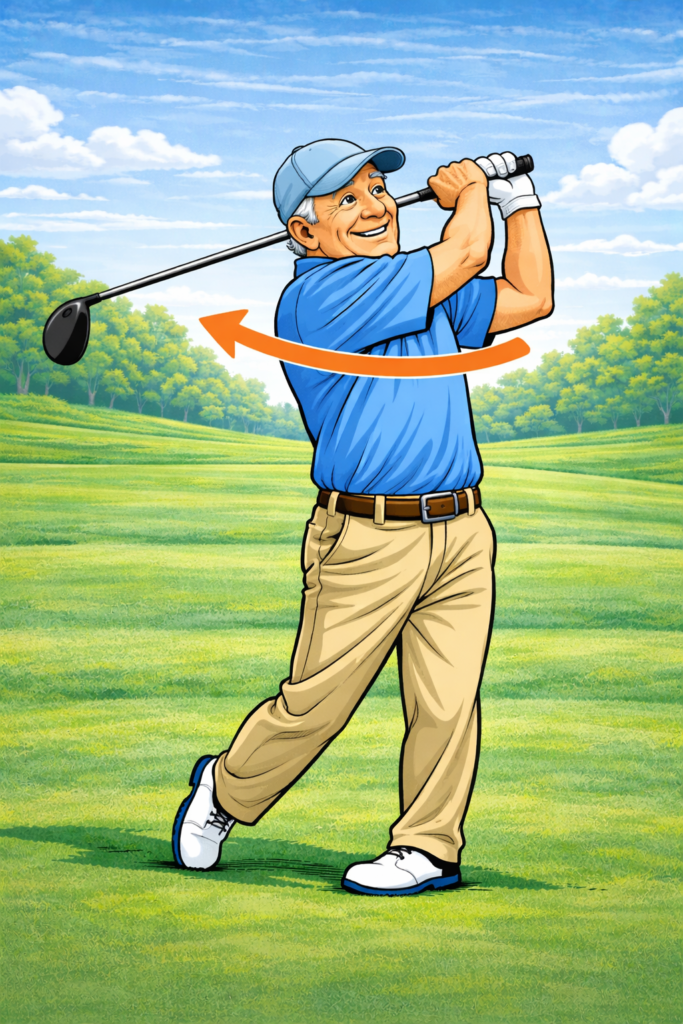
1. Get More Shoulder and Chest Turn
This is where most senior golfers should start.
A fuller turn creates a longer swing arc and gives the club more time and space to build speed. You don’t need to force it or overswing. You just need enough turn to let the club travel.
Focus on:
turning your chest away from the target
letting your lead shoulder move under your chin
finishing your backswing before rushing down
If the backswing is too short, the swing often becomes all hands and no flow.
A lot of older golfers start down with their hands, which throws off timing and costs distance. A better feel is to let the body lead and the arms follow.
Think: “Turn through it, don’t throw at it.”
3. Improve Contact Before You Chase Speed
This might be the fastest way to gain distance.
A centered strike can add noticeable yardage without any extra effort. Off-center shots bleed speed fast, especially with the driver and longer clubs.
Work on:
consistent ball position
stable posture
balanced tempo
hitting the middle of the face more often
You may not need a faster swing. You may just need to stop hitting it off the wrong zip code on the clubface.
4. Make Sure Your Equipment Fits Your Current Swing
A lot of golfers over 60 are still playing clubs fit for a swing they had 10 years ago.
That can be a problem.
As swing speed changes, it often helps to look at:
more loft on the driver
lighter shafts
more forgiving clubheads
fairway woods and hybrids that launch easier
golf balls that suit moderate swing speeds
The right equipment will not magically fix a bad swing, but it can absolutely help senior golfers launch it higher, carry it farther, and keep more speed on mishits.
5. Train Speed Gently, Not Violently
You can still train speed after 60. You just need to do it smart.
You don’t need to swing at 100 percent on every range ball. In fact, that usually backfires. But a few intentional, athletic swings with good balance can help maintain or even improve speed over time.
Try:
3 to 5 faster practice swings with no ball
swinging with good posture and balance
resting between swings
focusing on rhythm, not violence
The body still responds to being challenged. It just appreciates a little more courtesy than it used to.
Senior Insight
Senior Insight: Most golfers over 60 don’t need a new swing. They need a cleaner version of the one they already have.
A Simple Range Drill to Help You Hit It Longer
Next time you practice, try this drill.
The Smooth Power Drill
Hit 5 balls using this sequence:
Make a full but relaxed backswing
Pause for a split second at the top
Start the downswing by turning your lower body
Swing at about 80 percent effort
Focus on center-face contact
What usually happens?
You make better contact, stay in balance, and the ball goes farther than the “hit it hard” swing.
That’s the kind of distance that holds up on the course.
Common Mistakes Senior Golfers Make When Chasing Distance
If you want more yards, avoid these:
Swinging Too Hard
This usually creates tension and poor contact.
Overswinging
A longer swing is good. A sloppy, off-balance swing is not.
Ignoring Mobility
You can’t expect a fuller turn if your body can’t move.
Playing the Wrong Clubs
Old shafts, low-loft drivers, and hard-to-launch long irons can cost plenty of distance.
Thinking Distance Loss Is “Just Aging”
Some of it is. A lot of it is mechanics, contact, and setup.
What Senior Golfers Should Focus on First
If you want a practical plan, start here:
Improve your turn
Clean up your sequence
Strike the center more often
Check your driver loft and shaft
Use tempo instead of effort
You don’t need five swing thoughts on the first tee. You need a few smart priorities.
Senior Insight
Senior Insight: If your contact improves and your body keeps turning through the shot, you may gain distance without feeling like you swung harder at all.
Final Thoughts: You Can Still Hit It Farther After 60
Losing distance after 60 is real, but it’s not always as permanent as it feels.
Yes, the body changes. Flexibility changes. Speed changes. But many senior golfers give away more distance than age actually takes from them. That’s encouraging, because it means there’s room to get some of it back.
A better turn. Better sequence. Better contact. Better equipment.
That’s usually where the extra 10 to 15 yards come from.
So no, you probably do not need to swing harder. Your back, shoulders, and scorecard would all prefer you didn’t.
You just need to swing smarter.
Frequently Asked Questions About Losing Distance After 60
Why am I losing distance in golf after 60?
Most senior golfers lose distance because of reduced rotation, poorer sequencing, less centered contact, and equipment that no longer matches their swing.
Can senior golfers gain distance back?
Yes. Many older golfers can regain 10 to 15 yards by improving turn, balance, contact, and launch conditions without swinging harder.
Should I swing harder to hit it farther?
Usually no. Swinging harder often creates tension, poor timing, and off-center contact. A smoother, better-sequenced swing often produces more distance.
What clubs help senior golfers get more distance?
Many senior golfers benefit from higher-lofted drivers, lighter shafts, forgiving fairway woods, hybrids, and golf balls designed for moderate swing speeds.
How can I get more driver distance after 60?
Start by improving your turn, keeping better balance, striking the center of the face more often, and making sure your driver loft and shaft fit your current swing.
Gear That Can Help You Keep Your Distance
Not every distance problem is a swing problem. Sometimes the right setup makes the game easier right away.
🔔 Get My Free Senior Stretch Guide Join the Senior-Golfers.com Newsletter and get practical advice, equipment insights, and bonus guides delivered monthly — no spam.
The golf cart rule most golfers forget is simple, but ignoring it can lead to accidents, damaged golf carts, and even costly repairs on the course. At Senior-Golfers.com, we focus specifically on how the golf swing, equipment, and practice change after 60. If you’re looking for senior-friendly golf advice, start here. Golf carts make the…
Why the Right Compression Ball Can Add Distance and Control for Senior Golfers At Senior-Golfers.com, we focus specifically on how the golf swing, equipment, and practice change after 60. If you’re looking for senior-friendly golf advice, start here. 9 minutes read time Just want the quick answer? ⭐ Quick Summary: Best Golf Balls for Senior…
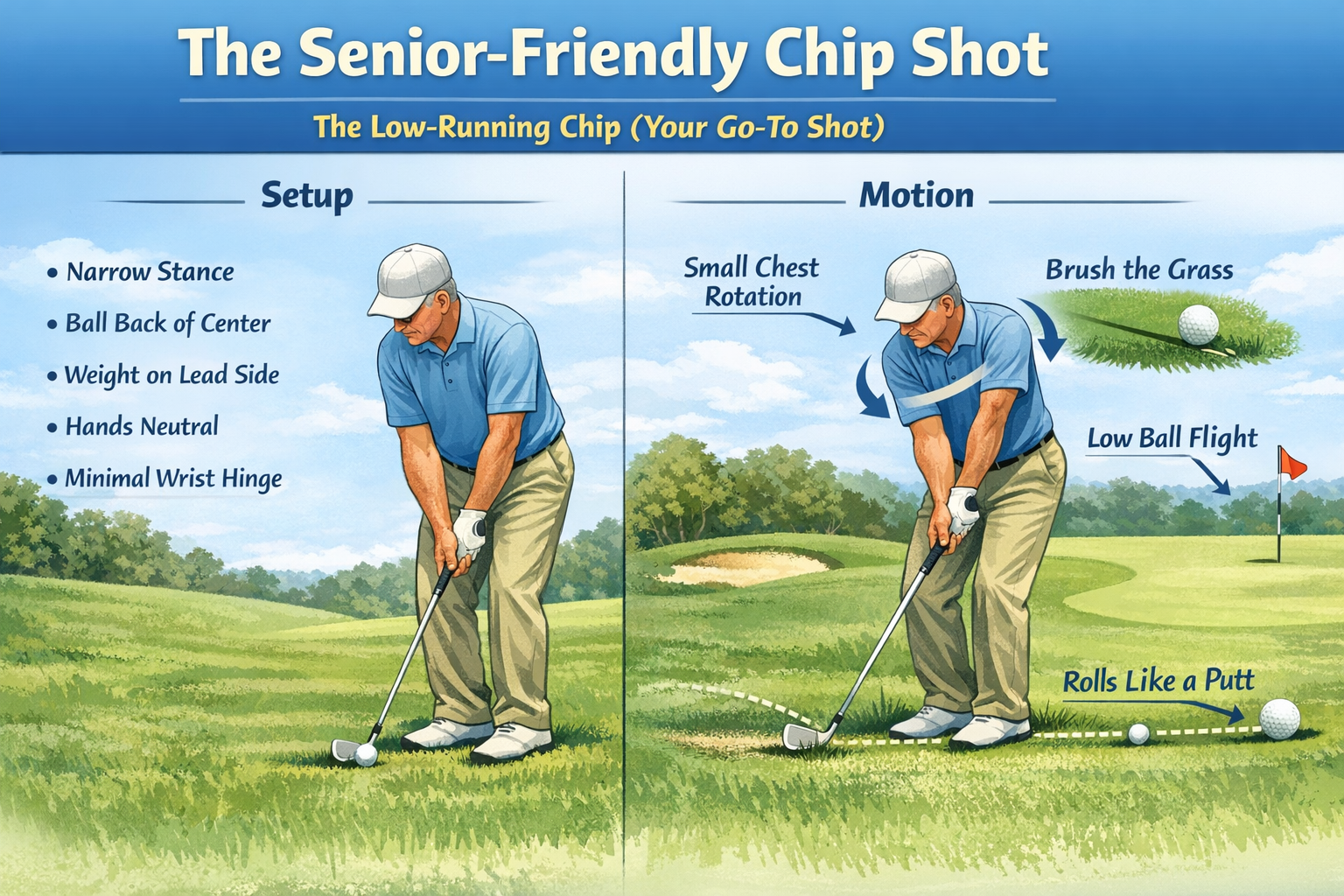
If there’s one part of golf that truly belongs to experienced players, it’s the short game for seniors. After 60, we may lose a little swing speed. We may not hit it as far as we once did. But scoring? Scoring still belongs to the golfer who controls the ball from 100 yards and in.…
Allen is a seasoned golfer who has been playing the sport for over 50 years, mostly in the Northwest, and now calls Idaho home. Throughout his life, he has actively participated in various sports, including snowboarding and windsurfing in the Columbia Gorge. Allen passionately believes that “Golf is Life” and is dedicated to helping fellow senior golfers make the most of their senior years








Comments