Senior Golfers: Improve Your Shoulder Turn for More Distance After 60 (2026 Guide)
By Allen Pedersen
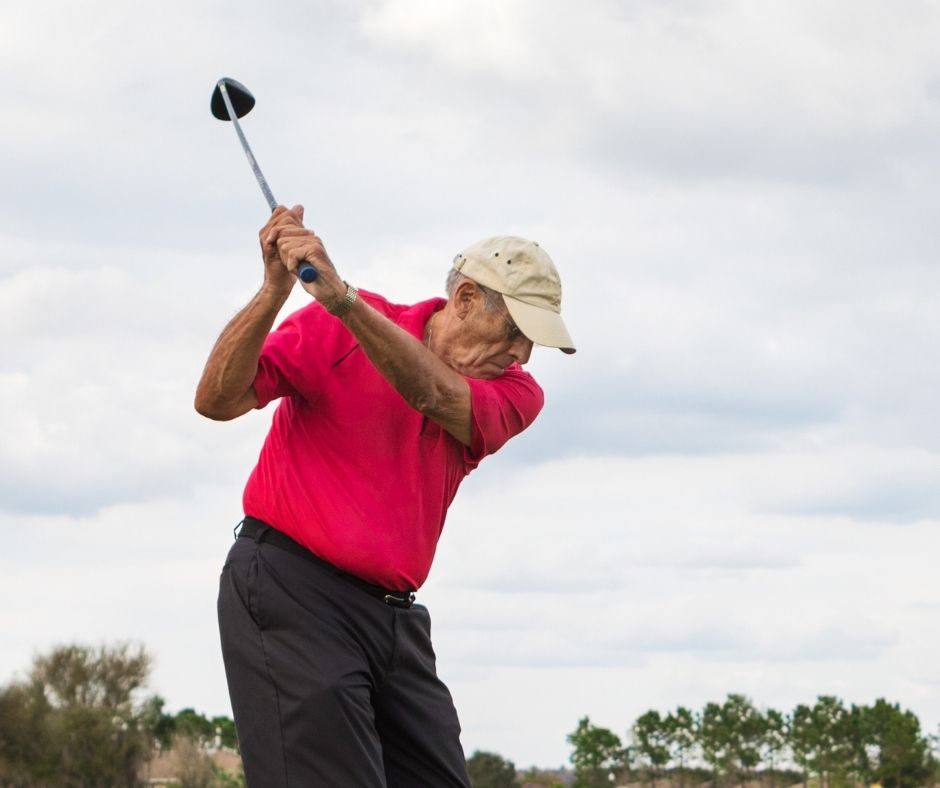
The shoulder turn in golf is a crucial component of a successful golf swing. It is a fundamental movement that allows golfers to generate power, maintain accuracy, and achieve optimal distance. While it may seem simple, mastering the shoulder turn can be challenging, especially for senior golfers. In this post, we will explore some tips and techniques to enhance and refine the shoulder turn in the golf swing, specifically tailored for senior players. Senior Golfers Shoulder Turn
At Senior-Golfers.com, we focus specifically on how the golf swing, equipment, and practice change after 60. If you’re looking for senior-friendly golf advice, start here.
Shoulder Turn in Golf Swing: Improving and Perfecting:
8 minutes read time
Senior Golfers: Improving the Shoulder Turn for More Distance and Less Pain (2026 Update)
Updated for 2026: This guide now includes a senior-friendly warm-up routine, mobility vs. strength breakdown, common shoulder turn mistakes, and an expanded FAQ section.
Flexibility and Warm-up: As we age, our bodies tend to become less flexible, making it harder to achieve a full and effective shoulder turn. That’s why it is essential for senior golfers to focus on improving flexibility and incorporating a thorough warm-up routine before hitting the course. Stretching exercises that target the shoulders, back, and torso can significantly enhance range of motion and allow for a more complete turn during the swing.
Proper Setup and Alignment: Before initiating the swing, ensure that your setup and alignment are correct. Align your feet, hips, and shoulders parallel to the target line. This alignment will enable your body to rotate properly during the backswing and downswing. A solid setup also promotes a more natural and fluid shoulder turn.
Establish a Wide Arc: During the backswing, aim to create a wide arc with your arms. Allow your lead arm (left arm for right-handed golfers) to extend fully, ensuring that it remains relatively straight. This extension maximizes the rotation of your shoulders and increases your swing’s potential power. Focus on maintaining a connection between your lead arm and chest throughout the swing to facilitate a wide and efficient turn.
Turn with Your Upper Body: To achieve an optimal shoulder turn, you must initiate the rotation from your upper body rather than relying solely on your arms. Engage your core muscles and use your torso to rotate with your shoulders. This coordinated movement generates a more powerful and synchronized swing. Avoid excessive tension in your arms and wrists, allowing them to follow the natural rotation led by your shoulders.
Maintain Balance and Stability: As you execute the shoulder turn, it’s crucial to maintain balance and stability throughout the swing. Keep your weight centered and evenly distributed between your feet. This stability allows for a smoother and more controlled turn, resulting in greater accuracy and consistency. Avoid any excessive lateral movement or swaying that could throw off your balance and compromise the quality of your swing.
Seniors aged 51 and above may notice a decrease in swing speed because their flexibility and muscle strength tend to decline. On average, seniors’ swing speed can range from 70 to 85 mph.
Always consult your physician when you have changes in physical activities
Practice Tempo and Rhythm: Developing an effective shoulder turn requires mastering the tempo and rhythm of your swing. Experiment with different tempos to find the one that allows you to maintain balance, generate power, and strike the ball with precision. Practice drills that focus on synchronized body movements and the timing of the shoulder turn. Over time, you will discover the tempo that suits your swing style and maximizes your performance.
Seek Professional Instruction: Working with a golf professional can significantly accelerate your progress in refining your shoulder turn. They can provide personalized guidance, analyze your swing mechanics, and offer specific drills and exercises tailored to your needs. Professional instruction ensures that you learn correct techniques and avoid developing bad habits that may hinder your shoulder turn.
Why Shoulder Turn Matters More After 60
For senior golfers, improving the shoulder turn isn’t about looking like Rory McIlroy — it’s about preserving efficiency.As we age, thoracic spine mobility naturally decreases. Shoulders tighten. Hips restrict rotation. When that happens, many golfers compensate by:
Overusing the lower back
Swaying instead of turning
Casting the club
Losing distance
Increasing injury risk
A proper shoulder turn allows you to:
Maintain width in your swing
Store energy in the backswing
Protect your lower back
Improve consistency
Add effortless distance
Recent golf fitness research continues to show that improved thoracic rotation increases clubhead speed without adding strain — especially important for golfers over 60.
The goal isn’t more effort.
The goal is better rotation.
What Is a Proper Shoulder Turn?
A proper shoulder turn means:
The lead shoulder rotates under your chin
Your upper body turns against stable lower body resistance
Your spine angle remains intact
Your head stays relatively steady
Your hips rotate naturally (not locked, not sliding)
For most senior golfers, a realistic backswing shoulder turn is about 80–90 degrees relative to the target line.
If you’re turning less than 60 degrees, you’re likely losing power.
The Real Problem: Mobility vs Strength
Many senior golfers assume:
“I just need to stretch more.”
Stretching helps — but mobility and strength are different.
Mobility
Mobility is your ability to move through a range of motion with control.
This involves:
Thoracic spine rotation
Shoulder external/internal rotation
Rib cage movement
Scapular control
Strength
Strength allows you to control that movement under speed.
If you only stretch, you may feel looser — but your swing won’t stabilize.
If you only lift weights, you may stay tight.
The solution: Mobility first, then strength.
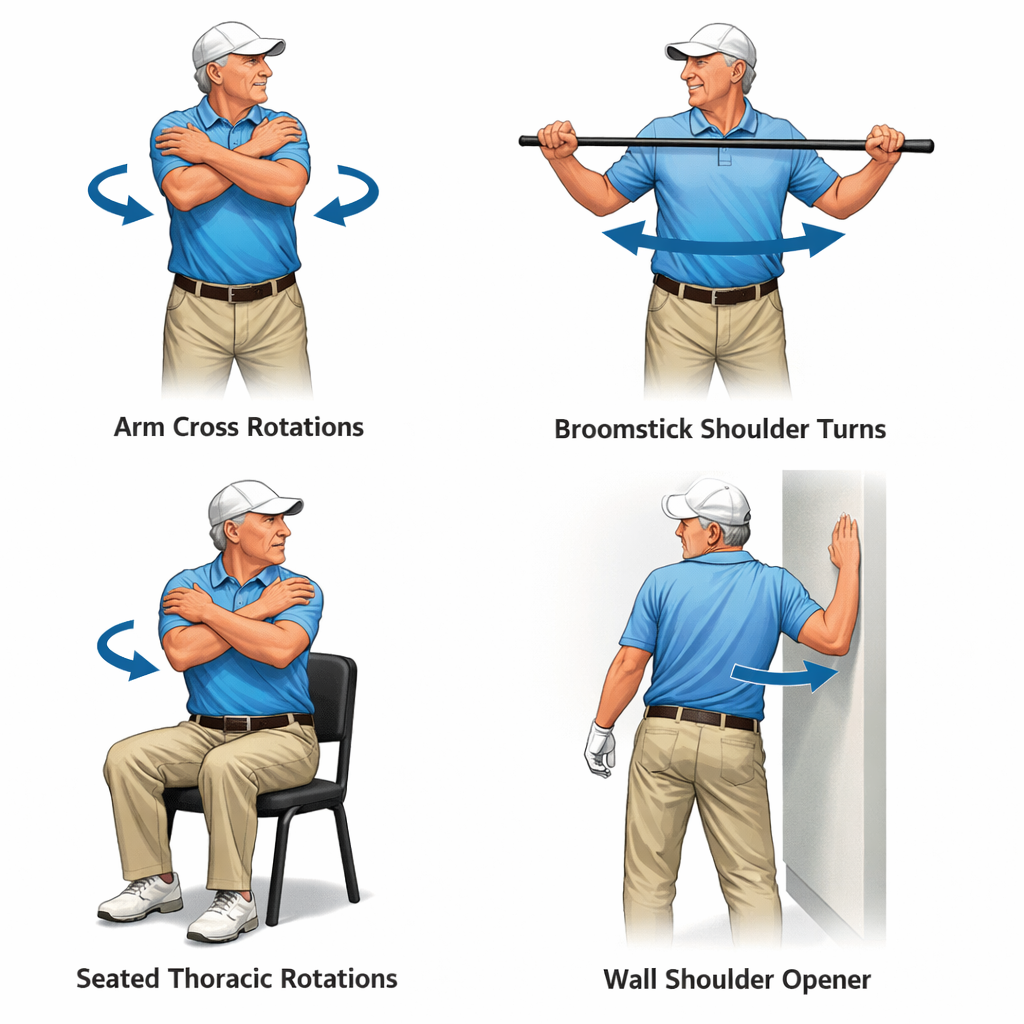
3-Minute Shoulder Warm-Up Routine for Senior Golfers
Before you hit balls, try this quick routine.
1. Arm Cross Rotations (30 seconds)
Stand upright
Rotate torso side to side
Keep hips quiet
Gradually increase range
2. Broomstick Shoulder Turns (1 minute)
Hold a club across your chest
Turn shoulders back and through
Focus on turning ribcage, not swaying
3. Seated Thoracic Rotations (1 minute)
Sit upright
Cross arms over chest
Rotate slowly left and right
4. Wall Shoulder Opener (30 seconds each side)
Place forearm on wall
Gently rotate away
Open chest without pain
This entire routine takes 3–4 minutes and dramatically improves swing fluidity.
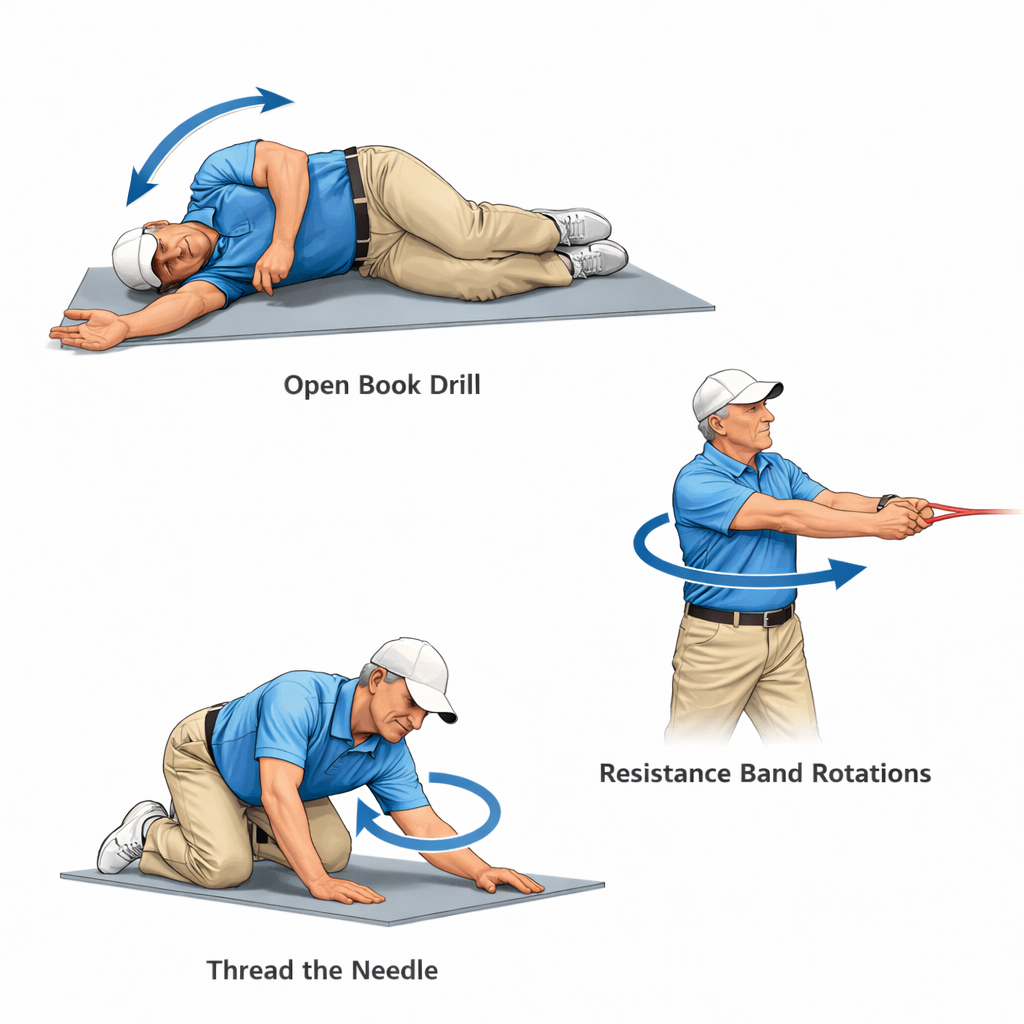
Mobility Drills to Improve Shoulder Turn
1. Open Book Drill
Lie on your side
Arms extended
Rotate top arm across body
Keep knees stacked
Excellent for thoracic rotation.
2. Thread the Needle
Start on hands and knees
Slide one arm under body
Rotate through mid-back
This builds rotational mobility without stressing the lower back.
3. Resistance Band Rotations
Attach band to door
Rotate slowly against resistance
Focus on smooth tempo
Now you’re building both mobility and strength.
Common Shoulder Turn Mistakes (And Fixes)
Mistake 1: Sliding Instead of Turning
Fix: Practice with a chair against your trail hip.
Mistake 2: Over-Locking the Hips
Senior golfers sometimes freeze their lower body.
Fix: Allow natural hip rotation.
Mistake 3: Lifting Arms Instead of Turning
If your arms lift but shoulders don’t rotate, you lose width.
Fix: Keep club across chest during practice swings.
Mistake 4: Forcing Range of Motion
Pain is not progress.
If shoulder turn causes discomfort, reduce range and improve gradually.
Mistake 5: Rushing the Backswing
Tempo affects rotation.
Slow backswing = fuller turn.
How Much Shoulder Turn Is Enough?
There is no “perfect” number.
However, for senior golfers:
70° minimum = playable
80–90° = ideal range
Less than 60° = likely power leak
If you’re unsure, record from down-the-line.
Shoulder Turn and Back Pain
Poor rotation often leads to:
Early extension
Reverse spine angle
Overuse of lumbar spine
Improving thoracic mobility reduces lower back strain.
That’s why shoulder turn training isn’t just about distance — it’s about longevity.
The golf cart rule most golfers forget is simple, but ignoring it can lead to accidents, damaged golf carts, and even costly repairs on the course. At Senior-Golfers.com, we focus specifically on how the golf swing, equipment, and practice change after 60. If you’re looking for senior-friendly golf advice, start here. Golf carts make the…
Why the Right Compression Ball Can Add Distance and Control for Senior Golfers At Senior-Golfers.com, we focus specifically on how the golf swing, equipment, and practice change after 60. If you’re looking for senior-friendly golf advice, start here. 9 minutes read time Just want the quick answer? ⭐ Quick Summary: Best Golf Balls for Senior…
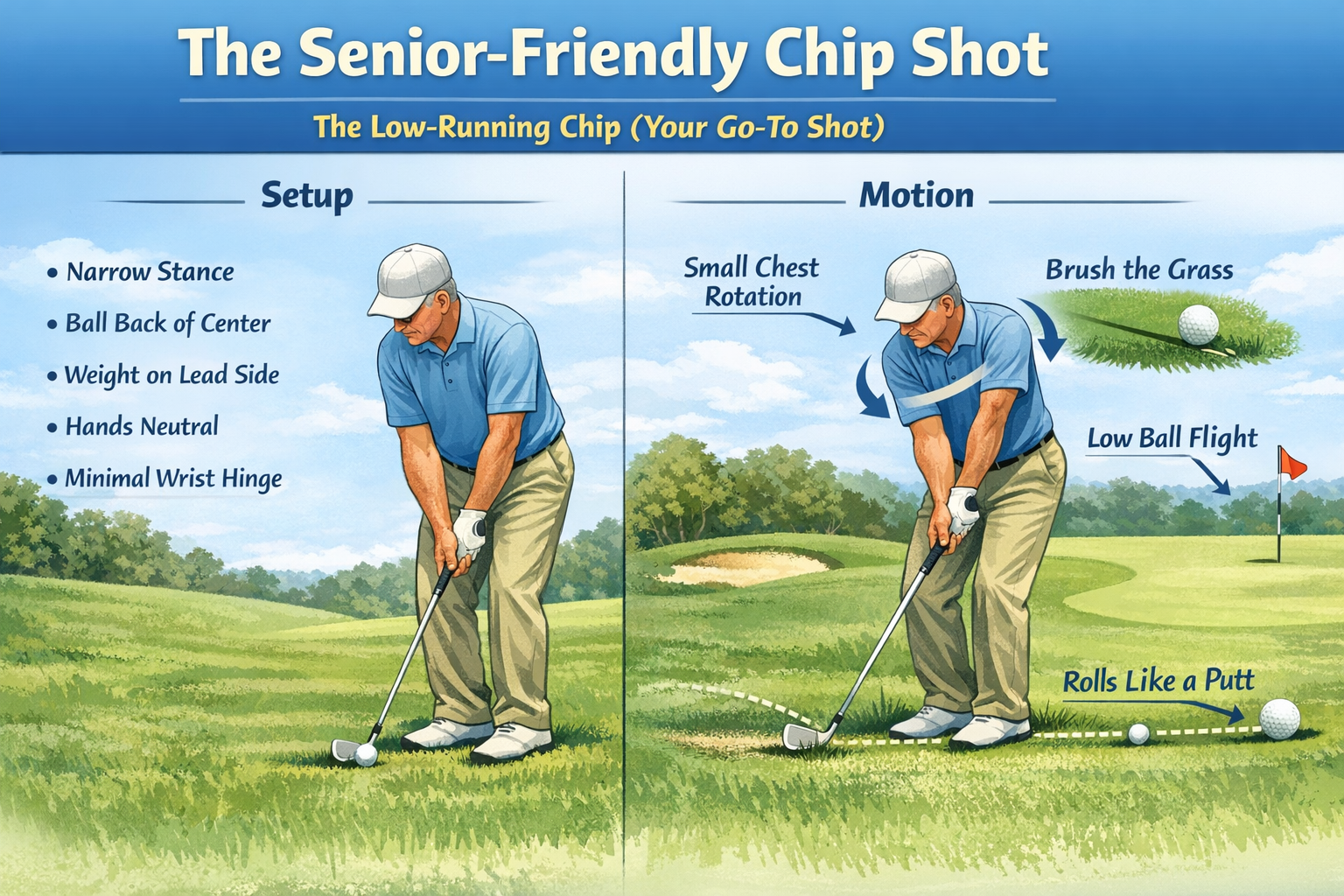
If there’s one part of golf that truly belongs to experienced players, it’s the short game for seniors. After 60, we may lose a little swing speed. We may not hit it as far as we once did. But scoring? Scoring still belongs to the golfer who controls the ball from 100 yards and in.…