Join Our Senior Golfers Newsletter!
Sign up today and receive your free Golf After 60 Bonus Stretch Guide!

Senior golfers, despite their age, can continue to enjoy and excel in their game by adopting healthy eating habits. Proper nutrition plays a crucial role in maintaining physical energy, mental focus, and overall well-being. In this article, we will explore the importance of eating right for senior golfers, delve into dietary considerations, and provide practical tips that can help enhance performance and optimize longevity on the golf course.

Senior Golfers: You Can Eat Right

Importance of Nutrition for Senior Golfers
As we age, our bodies undergo various changes, including reduced muscle mass, joint stiffness, and slower metabolism. These factors can impact a senior golfer’s performance on and off the course. Nutrition becomes vital to support muscle strength, mobility, cognitive function, and overall vitality. Consuming a well-balanced diet can provide the necessary nutrients for optimal performance and aid in injury prevention, recovery, and endurance capacity.
We advise you to consult your physician before making any changes to your diet and exercise routine.
Legal stuff
Dietary Considerations for Senior Golfers
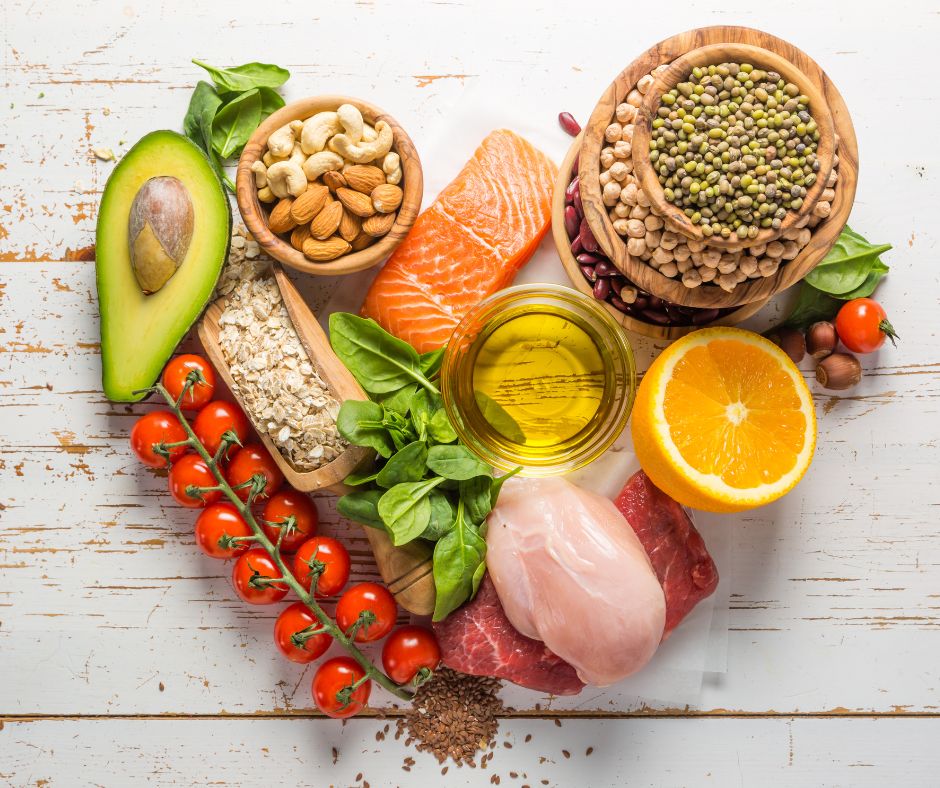
Antioxidants:
Include a variety of fruits and vegetables in your diet to benefit from their antioxidant properties. Fruits and vegetables are packed with vitamins, minerals, and antioxidants that are essential for good health. Aim to have a variety of colorful fruits and vegetables in your meals. They are rich in vitamins, minerals, and antioxidants that support overall health and can help reduce inflammation. They are also low in calories and fat, making them a good choice for golfers who are trying to lose weight or maintain a healthy weight.
Riding a golf cart you are still walking to and from (often elevated) tee boxes, and swinging your clubs, you still burn lots of calories playing golf with a cart — anywhere from between ~800 to 1,300, according to a WGF study.
wgf

Plan Ahead:
When playing a full round of golf, pack healthy snacks and water to avoid relying on unhealthy options from snack carts or vending machines.

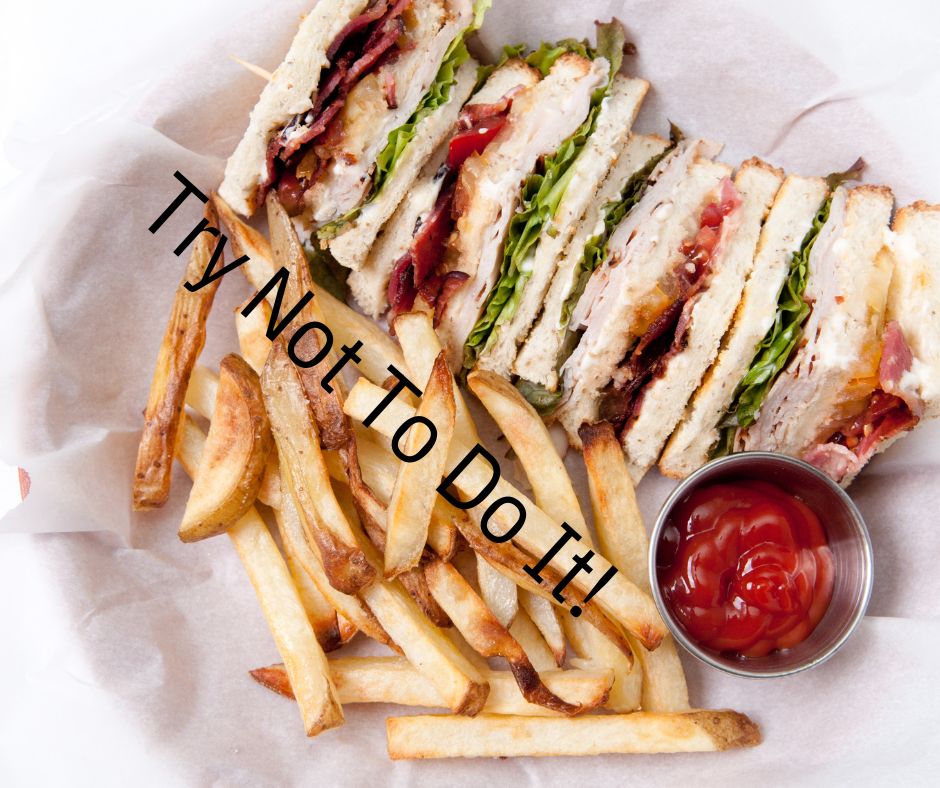
Avoid Processed Foods:
Minimize consumption of processed and fried foods, as they can increase inflammation, lead to weight gain, and hamper performance.
Here are some additional tips for senior golfers who are looking to eat right:
Conclusion
For senior golfers, adopting healthy eating habits is essential for overall well-being and performance on the course. A balanced diet rich in macro and micronutrients, along with proper hydration, can enhance endurance, cognitive function, and muscle recovery. By incorporating practical tips such as eating a balanced breakfast, smart snacking, and planning ahead, senior golfers can enjoy sustained energy levels, optimal muscle function, and improved focus during their rounds. Eating right is a simple yet effective way for senior golfers to enhance their game and ensure they continue enjoying golf well into their golden years.

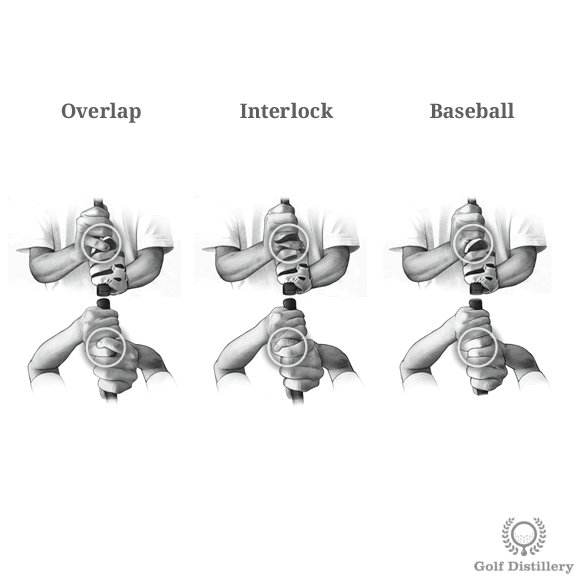
The way the hands connect to each other on the golf grip can vary along three main variants. The Overlap (Vardon), Interlocking and Baseball (10 Finger) grips are explained below.
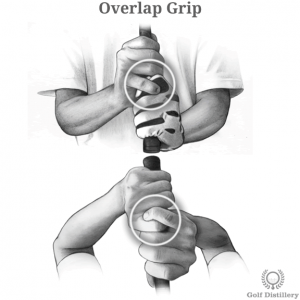
First the grip that is used the most frequently by golfers around the world. Indeed, the Vardon grip – or overlap grip – is used by 90% of Tour players and an overwhelming majority of amateur golfers around the world. It is so named after the famous British golfer that was the first to promote its benefits and win major tournaments with it, Harry Vardon.
In the overlap grip, both hands are connected through the right pinky finger which will lie on top of the depression between the left hand’s index and middle fingers.
As such, the right hand will stay in close contact with the left thanks to this anchor.
The long fingers and strong hands associated with adult male golfers are most suited for this type of grip whereas children or golfers with relatively small fingers would likely benefit from different types of grips.
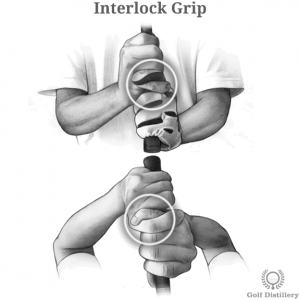
The second most widely used grip in golf is the interlocking grip. This type of grip will again see both hands connect to each other through the right hand’s little finger and the left hand’s index finger.
But in this case, those fingers will cross rather than sit one on top of the other. Indeed, as its name suggests, both hands will be held securely close to one another thanks to this locking position.
The interlock grip is famously the grip type that is used by Jack Nicklaus. And because it was utilized by his golf hero when growing up, Tiger Woods also adopted it.
While it is more true for the former than the latter, the interlock grip is quite useful for golfers with smaller than average hands and fingers.
Indeed, an overlap grip requires somewhat long fingers to allow for the pinkie to act as a solid anchor. If the pinkie is not long and strong enough the golfers risks seeing it slip out of position during the golf swing, rather than staying securely in place.
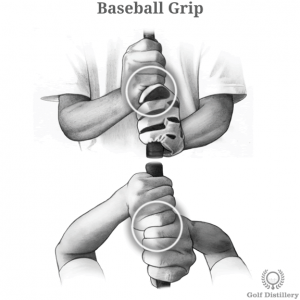
Finally we have what is called the baseball grip, or otherwise known as the 10 finger grip. Similarly to the sport that gave its name, this grip will see both hands pressed against each other on the grip.
However, in contrast to the other types of golf grips, no anchor will link them at all. Indeed, rather than sitting on top of other fingers or crossed with the index finger the right little finger will simply lie next to the left index finger, pressed against it.
This type of grip is usually adopted by young children as they begin swinging the club for the first times. Indeed, such a grip comes quite naturally to children – or anybody for that matter – which allow them to focus on other areas of the golf swing.
It is also used by senior golfers who have difficulties wrapping their hands around the club using any other technique, perhaps because of flexibility issues or pain in their fingers.
The short answer to this is to use the one that feels most comfortable and the one that gives you the greatest confidence going into a shot.
It might be a good idea to try them from the most popular type to the least.
As such, you could try with the overlap grip, then move on to the interlocking grip and finally into the baseball if none of the above are working out for you.