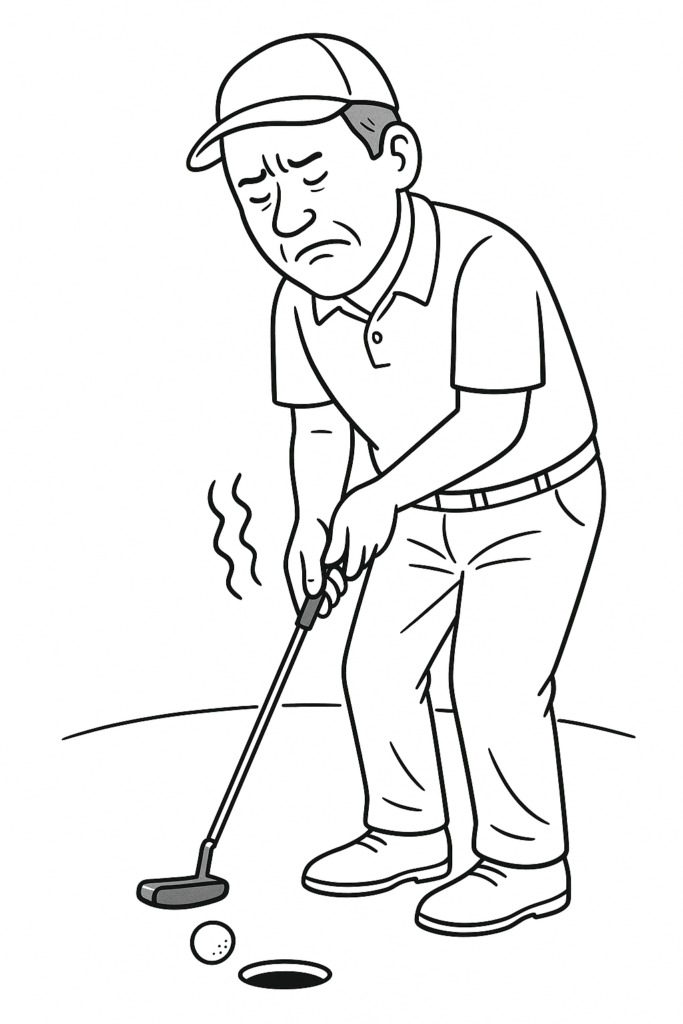
Every golfer has been there. You stand over a short putt—just three feet away. You know it’s makeable. You’ve made this same putt a thousand times. And then, just as you draw the putter back… your hands twitch, your wrists tighten, and the ball skids off line. ” Beating the Putting Yips: Finding Calm on the Greens”.
That involuntary jolt—the dreaded “yips”—can make even the best golfers feel helpless. But here’s the truth every senior golfer needs to remember: the yips aren’t a curse. They’re a signal that your mind and body have fallen out of rhythm. And that means they can be fixed.
Let’s look at how you can beat the yips, rediscover your feel, and find calm again on the greens.
The yips aren’t a lack of skill—they’re a loss of trust.
They often show up as small, involuntary movements in your hands or wrists during the putting stroke. They can cause jerks, flinches, or deceleration right at impact. Sometimes they appear physically; other times they’re purely mental—your brain simply won’t let the stroke flow.
Sponsored Links
For golfers over 60, the yips are more common because we’ve logged thousands of putts, practiced for decades, and built up layers of habits and expectations. The more you care, the more pressure your mind can place on your body.
It’s not age. It’s anxiety, muscle memory confusion, and tension. The good news? Those can all be retrained.
The Calm Comes First
Before we get into drills or putter tweaks, it starts with the simplest thing you control—your state of mind.
When you step onto the green, your heart rate and your hands tell a story. Are they calm, or are they tense? If they’re tight, your stroke will follow.
That’s where the “Circle of Calm” comes in—a technique I teach to senior golfers who want to rebuild confidence on the greens.
Sponsored Links
Step back from the putt.
Take one slow breath in, through the nose.
Exhale fully, letting the tension leave your shoulders.
Widen your stance, let your arms hang naturally.
Picture the putt rolling in—not the miss, not the motion—just the roll.
Now step into your Circle of Calm, and only then set up to hit. It sounds simple, but it retrains your brain to connect relaxation with your putting motion. The more you do it, the more natural it becomes.
“Calm mind, steady hands—every putt begins before the stroke.”
Resetting After Frustration
Nothing destroys rhythm like frustration. You miss a short one, and suddenly every putt feels twice as hard. That emotional hangover feeds the yips faster than anything.
So after a miss, give yourself permission to reset.
Step back.
Breathe out.
Let the miss go physically—exhale it away.
Make one easy practice stroke with your eyes closed. Feel the rhythm, not the result.
That’s your mini-reset drill. It teaches your body and brain that missed putts don’t define your next one.
Sponsored Links
“The first fix isn’t a new putter—it’s a new mindset.”
Why the Right Compression Ball Can Add Distance and Control for Senior Golfers At Senior-Golfers.com, we focus specifically on how the golf swing, equipment, and practice change after 60. If you’re looking for senior-friendly golf advice, start here. 9 minutes read time Just want the quick answer? ⭐ Quick Summary: Best Golf Balls for Senior…
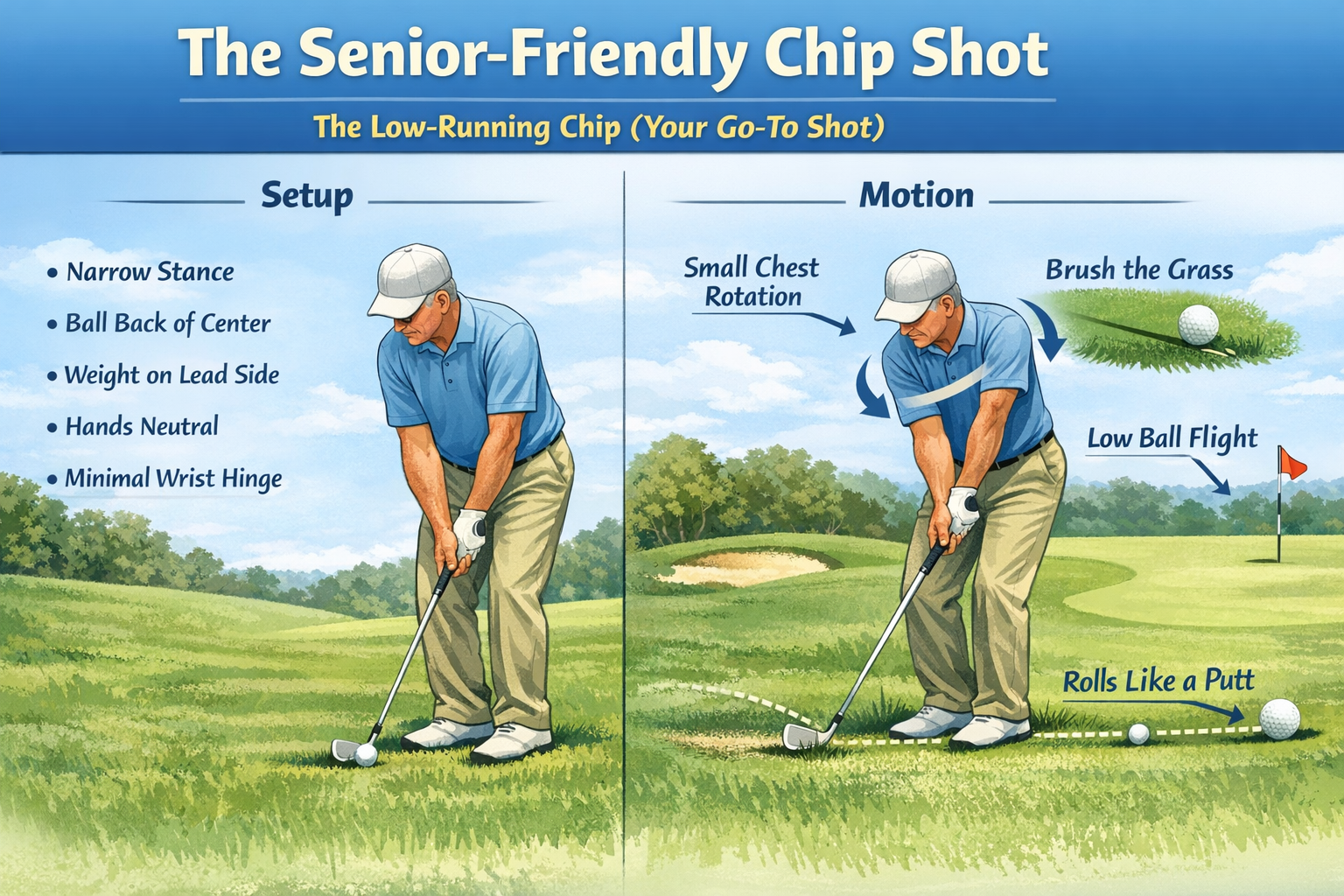
If there’s one part of golf that truly belongs to experienced players, it’s the short game for seniors. After 60, we may lose a little swing speed. We may not hit it as far as we once did. But scoring? Scoring still belongs to the golfer who controls the ball from 100 yards and in.…
The shoulder turn in golf is a crucial component of a successful golf swing. It is a fundamental movement that allows golfers to generate power, maintain accuracy, and achieve optimal distance. While it may seem simple, mastering the shoulder turn can be challenging, especially for senior golfers. In this post, we will explore some tips…
There’s a moment that happens to almost every golfer over 60. You’re on the range.You make a swing.And you think: “That didn’t used to feel this hard.” Not painful.Not broken. Just… harder. At Senior-Golfers.com, we focus specifically on how the golf swing, equipment, and practice change after 60. If you’re looking for senior-friendly golf advice,…
At Senior-Golfers.com, we focus specifically on how the golf swing, equipment, and practice change after 60. If you’re looking for senior-friendly golf advice, start here. YouTube golf tips can be a great resource — but for golfers over 60 they often create frustration instead of improvement. If you’ve ever watched a video, tried it at…
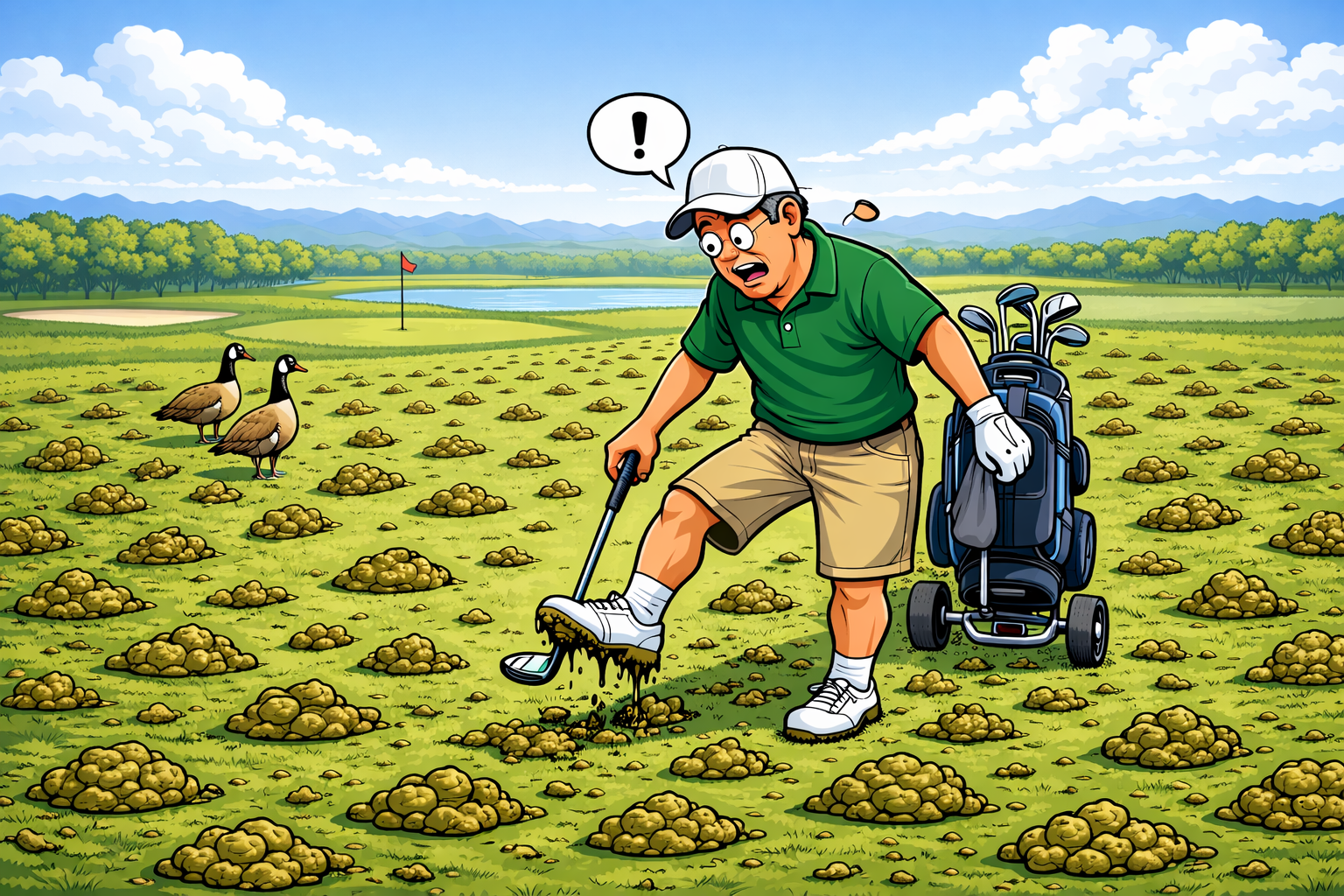
If you’ve played golf in late fall, winter, or early spring, you’ve probably noticed the same frustrating thing — goose poop is everyhere on golf courses. It’s on the fairways, around the greens, along the cart paths, and sometimes even caked onto your pull cart wheels like you drove through a pasture. What used to…
Once your mind is calm, your body has to relearn what smooth feels like. That means practicing motion without outcome pressure.
1. The Eyes-Closed Drill
Set up to a short putt, three to five feet. Take one look at the hole, then close your eyes and make the stroke. At first it feels strange—but that’s the point. You’re removing the urge to steer the ball and letting your body rediscover tempo.
Do 10–15 repetitions each day. You’ll be amazed how quickly your stroke smooths out.
2. The One-Handed Drill
Using just your lead hand (left for right-handed players), roll short putts across the green. This builds feel and forces your shoulders—not your wrists—to drive the stroke. The lead hand should control distance and tempo.
3. The Ten-Ball Rhythm Drill
Drop ten balls around the hole at 3, 5, and 7 feet. Hit all ten in a row with one smooth tempo. Don’t chase perfection—chase consistency of rhythm. Your brain learns tempo through repetition, not through overthinking.
The Equipment Factor
Sometimes, equipment changes can reduce tension dramatically—especially for senior golfers.
Consider a Longer Putter
If you struggle with hand tremors or wrist flicks, a broomstick or mid-length putter can quiet the hands and engage the shoulders. LAB Golf’s DF3 broomstick and similar models have helped many golfers over 60 find a stable, pendulum motion again.
Grip Pressure and Weight
Lighter grip, heavier head. That’s the golden combo for most seniors. A light grip reduces tension; a heavier head promotes smooth momentum. Experiment with counterbalanced grips or slightly heavier heads to find your natural pace.
The Mindset Shift: From Fear to Freedom
When you’ve had the yips for a while, every putt starts feeling like a test. You walk onto the green hoping not to mess up instead of expecting to roll it true. The shift comes when you realize the outcome doesn’t define you—the process does.
Here’s a simple mantra to use before every putt:
“Breathe, see the line, roll the ball.”
That’s it. No analysis, no future thoughts. Just a calm process. The more you train your brain to focus on the process, the less it fears the result. That’s where freedom lives.
Visualization: Rebuilding the Image of Success
The mind can’t distinguish clearly between a vividly imagined event and a real one. So if all you visualize is missing, your nervous system “learns” to flinch.
Before you hit any putt, visualize success:
See the ball rolling on your intended line.
Hear the quiet “click” of impact.
Picture the ball dropping gently into the cup.
Do this even away from the course. Visualization is practice for the nervous system.
The Circle of Calm – Your Putting Sanctuary
Imagine you’re standing over a must-make putt to save par. Instead of panic, you feel peace. You know the stroke is simple: a gentle rock of the shoulders, quiet hands, smooth roll.
That’s what the Circle of Calm builds—a mental habit that overrides the yips.
Breathe in confidence.
Breathe out tension.
Commit to your routine.
Trust your motion.
Every putt becomes a chance to practice calm—not perfection.
“Confidence is built one quiet roll at a time.”
Turning Frustration into Flow
Senior golfers have one huge advantage over younger players: perspective. We’ve missed more putts, fought more swing changes, and learned that golf is less about mastery and more about managing yourself.
When you start viewing the greens not as battlefields but as quiet classrooms, the game changes. Each putt—make or miss—is feedback.
Miss high? Good—now you know. Hit it soft? Great—you felt it. Every roll teaches you something. When frustration fades, flow appears.
Confidence Restored
Beating the yips isn’t about never flinching again. It’s about knowing how to return to calm, every single time. The golfer who can reset, breathe, and trust will always beat the one who forces, fights, or fears.
When you find peace over the ball, putting becomes fun again. You’ll walk off the green smiling, not because you made every putt, but because you trusted yourself on every stroke.
And that—more than any grip change or gadget—is how you truly beat the yips.
“It’s not about perfection—it’s about peace of mind on the greens.”
Final Takeaway
The next time you feel your hands tighten over a short one, remember this: The yips aren’t your enemy—they’re a reminder to breathe, to trust, and to simplify.
Golf after 60 is about playing smarter, calmer, and freer. The greens are where that transformation starts.
So take your next putt inside your Circle of Calm. Roll it with confidence. Smile when it drops—or when it doesn’t. Because when your mind is steady, the putts start rolling true again.
🔔Want more senior-specific golf tips? Join the Senior-Golfers.com Newsletter and get practical advice, equipment insights, and bonus guides delivered monthly — no spam.
Allen is a seasoned golfer who has been playing the sport for over 50 years, mostly in the Northwest, and now calls Idaho home. Throughout his life, he has actively participated in various sports, including snowboarding and windsurfing in the Columbia Gorge. Allen passionately believes that “Golf is Life” and is dedicated to helping fellow senior golfers make the most of their senior years









Comments