🏌️♂️ Club Fitting for Senior Golfers: Why the Right Fit Matters More After 60
By Allen Pedersen
Club Golf Club Fitting for Senior Golfers: Is It Worth It After 60?
At Senior-Golfers.com, we focus specifically on how the golf swing, equipment, and practice change after 60. If you’re looking for senior-friendly golf advice, start here.
8 minutes read time
If you’re a senior golfer wondering whether a club fitting is still worth it — the short answer is yes, but not for the reasons most golfers think.
For golfers over 60, club fitting isn’t about chasing tour-level numbers. It’s about comfort, consistency, and playing pain-free while keeping as much distance as possible.
Why Club Fitting for Senior Golfers Is Different After 60
Many senior golfers are playing clubs that were fit (or bought off the rack) years ago — before changes in strength, flexibility, balance, and swing speed naturally occurred. That mismatch quietly costs distance, accuracy, and enjoyment.
Let’s break down why club fitting matters more after 60, what actually changes in your swing, and how to get fit the right way as a senior golfer.
Why Club Fitting Matters More After 60
Most golfers think of club fitting as a luxury — something the tour pros and custom gear enthusiasts do to squeeze out extra distance.
But for golfers after 60, fitting isn’t just about distance.
It’s about comfort, consistency, and movement limitations.
As we age, small changes in body mechanics — shoulder turn, wrist flexibility, hip rotation — can subtly alter the way we swing. These changes might not be dramatic, but over hundreds of swings they add up.
Golf clubs are tools. They need to work with your motion — not fight against it. Before trying a swing change, many golfers see improvement from the Senior Golfer Stretch Guide.”
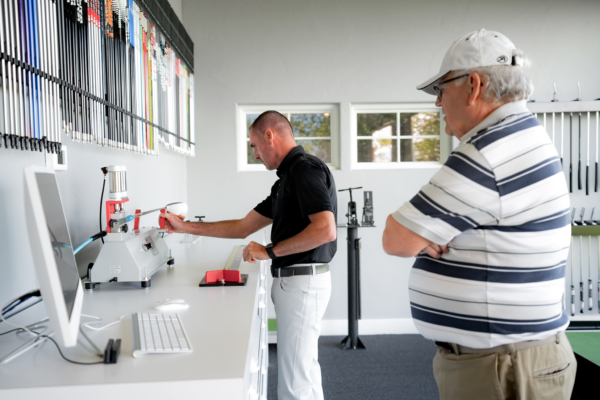
And that’s why fitters don’t just measure height and wrist-to-floor anymore. Especially for senior golfers, they are analyzing:
A proper club fitting doesn’t try to force your body into a textbook position.
Instead, it adjusts the equipment to fit you — so that your best swing feels easier and more natural.
This is also why golfers who feel “stuck” in their swing often see improvement simply by first assessing mobility, then pairing that with a fitting session.
Why Club Fitting Becomes More Important After 60
As we age, our golf swings change — even if our fundamentals stay solid.
AI golf instruction is becoming one of the newest ways golfers can use artificial intelligence to improve their game. AI can already write an email, plan a vacation, answer questions, analyze photographs—and now it can even analyze your golf swing. But can it actually help you play better golf? That was the question I wanted…
How Tee Height and Ball Position Can Help Senior Golfers Launch It Higher, Find the Center of the Face, and Get More From Their Driver One of the easiest ways for senior golfers to gain more from the driver is to check driver tee height for senior golfers and ball position before making another swing…
Sometimes the best golf memories aren’t made on the golf course—they’re made afterward. 2-night golf getaways for senior golfers are one of the best ways to enjoy great golf, reconnect with friends, and recharge without spending a week away from home. Sometimes, the best golf memories aren’t made by shooting your lowest score—they’re made around…
Many seniors gain distance not by swinging harder — but by launching the ball higher with less spin.
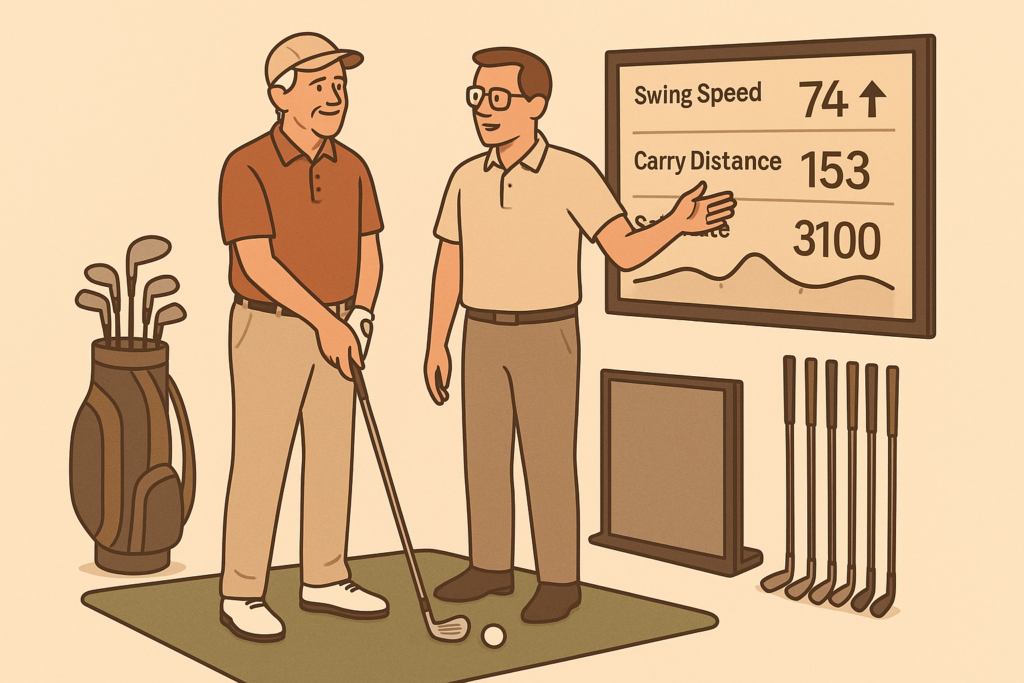
A good fitting focuses on:
Launch angle
Carry distance
Consistent strike location
Iron Fitting: Consistency Over Distance
For irons, senior golfers should prioritize:
Launch and stopping power
Distance gaps (not max yardage)
Comfort and vibration reduction
Graphite iron shafts are no longer “only for beginners” — many tour pros and elite seniors use them for joint protection and consistency.
Do Senior Golfers Need a Full Bag Fitting?
Not always.
A smart approach:
Start with driver + irons
Then evaluate wedges and putter
Putter fitting is especially valuable for seniors struggling with:
The yips
Inconsistent pace control
Alignment issues
Even small putter changes can produce immediate results.
Where Senior Golfers Should Get Fit (Important)
Not all fittings are equal.
Look for a fitter who:
Has experience with senior golfers
Understands slower swing speeds
Focuses on comfort and control
Uses real-world ball flight (not just simulators)
Avoid fittings that:
Push expensive upgrades
Focus only on speed numbers
Ignore physical limitations
A good senior fitting feels educational, not sales-driven.
When a Club Fitting Makes Sense After 60
You should strongly consider a fitting if:
Your clubs are more than 5–7 years old
Your swing speed has changed
You experience joint or hand pain
You struggle with consistent contact
You’ve lost distance without explanation
Even one or two small adjustments can rejuvenate your game.
FAQ: Club Fitting for Senior Golfers
Q1: Is club fitting worth it for senior golfers? Yes. A proper fit can improve launch, distance, and accuracy while reducing strain—especially with the right shaft weight, flex, and grip size.
Q2: What should seniors focus on in a fitting first? Start with driver and fairway woods (launch/spin), then irons (lie angle/shaft), then wedges (gapping), and finally putter (aim/tempo).
Q3: What shaft is best for senior golfers? There’s no single “best,” but many seniors benefit from lighter shafts and the correct flex/profile to improve tempo and center contact.
Q4: Do seniors need more loft on the driver? Often, yes. Many golfers 60+ gain carry with a bit more loft and the right shaft to increase launch and optimize spin.
Q5: What grip size is best for older hands or arthritis? Many seniors prefer midsize or jumbo grips to reduce grip pressure and hand pain, but the right size depends on hand size and release pattern.
Senior Insight
The right clubs don’t make you swing harder — they help you swing freer.
How Club Fitting Works With the Whole Game — Not Just Long Hitting
One of the biggest misunderstandings golfers have is that fitting only matters for the driver. But that’s backwards.
If your wedges, irons, and putter aren’t aligned with your ability and body mechanics, then:
Your scoring clubs become harder to strike consistently
You add tension to compensate
Your confidence on short shots drops
You chase distance instead of accuracy
For a senior golfer, this often shows up like:
“My long iron feels okay, but my 7-iron just won’t come off the face right.”
“I feel like I’m trying to muscle the ball.”
These are not skill issues.
Often, they are fit issues.
A well-fitted bag should allow you to:
Swing without compensating
Strike the ball cleaner
Hit more shots in the strike zone
TRUST your motion
When equipment supports your body, the swing becomes simpler — not more complicated.
This is also why many golfers notice improvements in short game and putting after addressing body mechanics and club fit — think about how a balanced stance, aligned shaft, or proper lie angle can quiet your hands and improve distance control.
In fact, your approach to equipment should be just as measurable as your approach to mobility and practice.
A matched system — your body + your motion + your equipment — is the foundation of repeatable golf.
And that’s not an old golfer myth — that’s exactly why some of the best senior players in the game emphasize fitting far more than most amateur players.
Final Verdict: Is Club Fitting Worth It for Senior Golfers?
Absolutely — when done correctly.
For senior golfers, the real benefits of club fitting are:
More enjoyable rounds
Less physical strain
Better consistency
Renewed confidence
You don’t need perfect clubs — you need clubs that work with your body, not against it.
That’s the real advantage of club fitting after 60.
🔔Want more senior-specific golf tips? Join the Senior-Golfers.com Newsletter and get practical advice, equipment insights, and bonus guides delivered monthly — no spam.
Allen is a seasoned golfer who has been playing the sport for over 50 years, mostly in the Northwest, and now calls Idaho home. Throughout his life, he has actively participated in various sports, including snowboarding and windsurfing in the Columbia Gorge. Allen passionately believes that “Golf is Life” and is dedicated to helping fellow senior golfers make the most of their senior years
YouTube Golf Tips Frustrate Golfers Over 60 (Here’s Why)
[…] is also why club fitting for senior golfers becomes more about comfort and consistency than chasing […]
ROM Tests for Senior Golfers: Why Your Swing Feels Harder After 60
[…] and setup start to matter more than mechanics. Many golfers find that changes discussed in club fitting for senior golfers or even stability-focused equipment like LAB putters for senior golfers suddenly make more sense […]
Off-Season Golf Plan for Seniors: What to Do From November to February
[…] is the same concept that drives smart equipment decisions in posts like club fitting for senior golfers and helps explain why many golfers see improvement in short game and confidence without drastic […]
Senior Golfers Shoulder Turn: More Distance After 60
[…] Club Fitting for Senior Golfers […]
Join Our Senior Golfers Newsletter!
Sign up today and receive your free Golf After 60 Bonus Stretch Guide!






Comments
[…] is also why club fitting for senior golfers becomes more about comfort and consistency than chasing […]
[…] and setup start to matter more than mechanics. Many golfers find that changes discussed in club fitting for senior golfers or even stability-focused equipment like LAB putters for senior golfers suddenly make more sense […]
[…] is the same concept that drives smart equipment decisions in posts like club fitting for senior golfers and helps explain why many golfers see improvement in short game and confidence without drastic […]
[…] Club Fitting for Senior Golfers […]