Off-Season Golf Plan for Seniors: What to Do From November to February
By Allen Pedersen
At Senior-Golfers.com, we focus specifically on how the golf swing, equipment, and practice change after 60. If you’re looking for senior-friendly golf advice, start here.
9 minutes read time
For many senior golfers, November marks the quiet shift from long, warm rounds to colder days, softer fairways, and—depending on where you live—a long stretch where regular golf just isn’t possible. But the off-season golf doesn’t have to be “lost time.
In fact, November through February can be the most productive months of the year for senior golfers who want to:
protect their joints
improve flexibility
sharpen technique
build confidence on the greens
and even gain distance for next spring
This guide gives you a simple, realistic, senior-friendly off-season golf plan to keep your game sharp, pain-free, and improving all winter long.
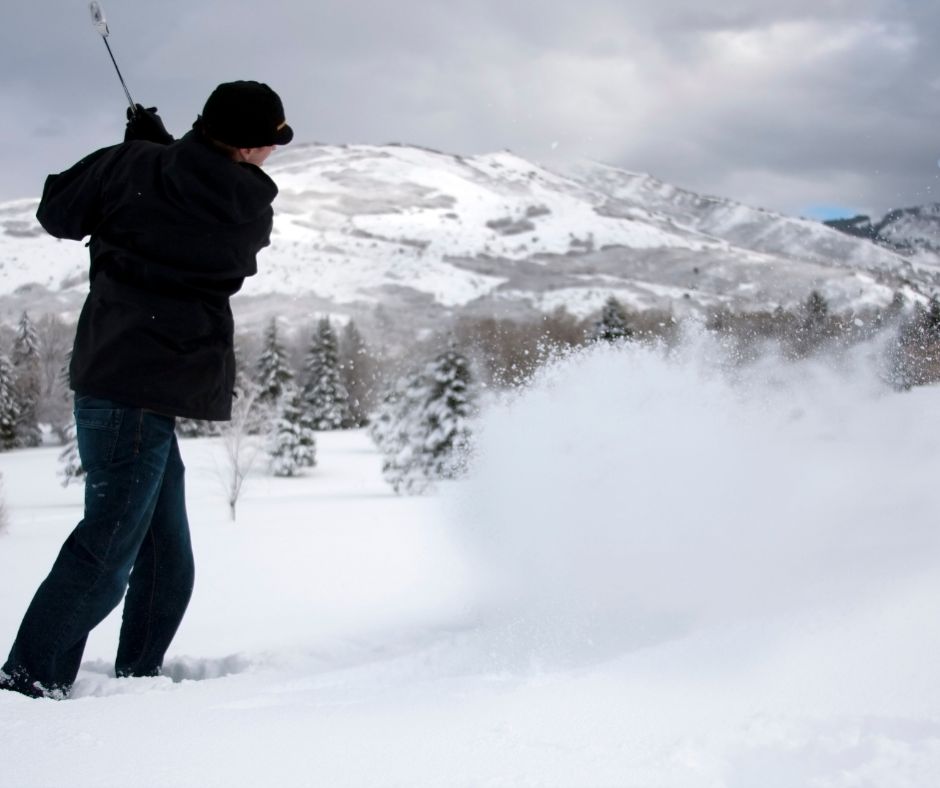
“Golfers in the southern states just keep playing year-round, grinning at the northern golfers bundled up in so many layers we can barely bend enough to pick up a tee.”
Understanding Why the Off-Season Is Different for Senior Golfers
Winter isn’t just “time off” for most senior golfers — it’s a turning point.
Sponsored Links
What separates golfers who return in spring feeling ready versus those who feel rusty isn’t just how much they swing in the off-season. It’s whether they focus on the right things.
For golfers under 50, winter often means:
technical swing work
building speed
power training
But for golfers over 60, those things aren’t as high-impact as:
mobility and range of motion
balance and stability
transition play from short game into full swing
post-round recovery
This shift is important because mobility limitations often show up first in the swing — before pain, before inconsistency, and before distance loss. If they go unchecked, those limitations quietly limit progress all season long.
The same limitations that influence your full swing also influence your short game. Many seniors feel their putter start to tug right or push left in March without realizing that tight shoulders or a stiffness in the upper back — things measured by simple mobility tests — are a big part of the story.
And that’s where a season plan stops being a nice idea and becomes a strategic advantage.
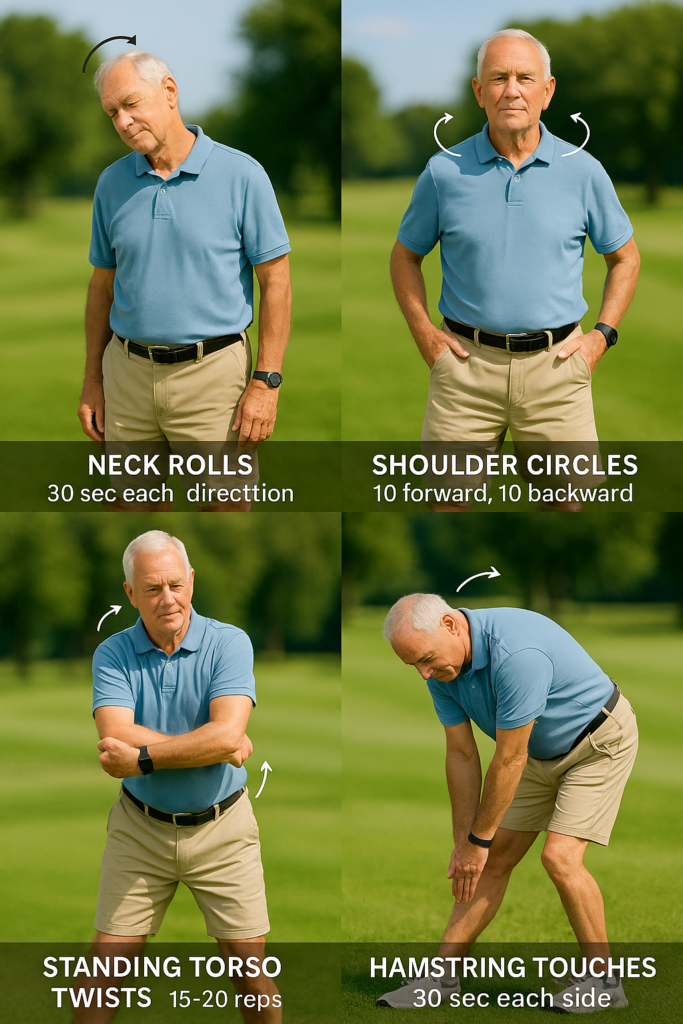
1. Keep Your Body Loose: The Senior Flexibility Routine
✔ Do this routine 3–5 times per week:
Neck Rolls – 30 seconds each direction
Shoulder Circles – 10 forward, 10 backward
Torso Twists – 20 slow reps
Hip Rotations – 10 each way
Hamstring Touches – 30 seconds each leg
Calf Stretch on Wall – 30 seconds
Cat-Cow Stretch – 10–15 reps
Colder months stiffen joints, reduce mobility, and slow the swing. A few minutes of movement each day helps fight stiffness and protect your back, hips, and shoulders.
This alone reduces winter stiffness and lowers spring injury risk by over 40% for older athletes (according to sports-medicine studies).
2. Maintain Swing Mechanics With Indoor Drills
You don’t need a driving range to keep your swing alive all winter. Seniors benefit most from slow, controlled reps that reinforce balance and rhythm.
✔ Try these at-home drills:
1. Mirror Slow-Motion Swings Focus on posture, spine tilt, and a smooth takeaway.
Sponsored Links
2. Chair-Balance Drill Lightly touch a chair with your trail hip to keep rotation centered (not swaying).
3. Alignment Stick Drill Work on takeaway path, top-of-swing position, and hip rotation.
4. Pillow Impact Drill Swing into a couch cushion to feel proper rotation and solid contact.
These drills improve mechanics without stressing your joints — perfect for the 60+ golfer.
3. Build Putting Skill Indoors (This Is Your BIG Opportunity)
Winter is prime time to fix the yips, sharpen feel, and build confidence on short putts.
✔ What seniors should work on:
10-Foot Line Drill: Use a chalk line or putting mat.
2-Foot Confidence Circle: Sink 50 per day — total game changer.
1-Hand Lead-Arm Drill: Quiet the wrists, stabilize the stroke.
Gate Drill: Improves face angle (your #1 putting accuracy factor).
Most seniors can dramatically lower scores next spring by dedicating just 10 minutes per day to putting during the off-season.
Senior Insight:
🏌️♂️ Winter Simulator Upgrade for Seniors
Your Secret Weapon for Staying Golf-Ready November–February
Golf simulators are one of the most powerful tools senior golfers can use during the off-season. When cold weather hits and the fairways freeze, a simulator keeps your swing alive, your body moving, and your confidence high — without straining joints or dealing with icy turf.
Why Seniors Should Use Simulators in Winter
Practice in a warm, comfortable environment
Protect joints from cold-weather stiffness
Get instant feedback on swing path, face angle, and ball flight
Keep your tempo and rhythm sharp all winter
Play full simulated rounds with friends or leagues
Maintain confidence heading into spring
Sponsored Links
Join a Local Indoor Golf Center
Many indoor golf businesses now offer monthly winter memberships, perfect for seniors:
$69–$99/month: Off-peak or weekday access
$120–$180/month: Unlimited or extended access
$20–$40/hour: Pay-as-you-go drop-in rates
Memberships often include: ✔ Putting & chipping areas ✔ Discounted lessons ✔ Swing speed training ✔ Video analysis ✔ Quiet morning hours ideal for seniors
What to Look For
Soft, joint-friendly hitting mats
Top-tier simulators (Trackman, GCQuad, Uneekor)
Warm, accessible practice bays
Coaching available if needed
Senior-friendly schedules
Pro Tip:
You don’t need to swing hard indoors — slow, smooth, repeatable mechanics are exactly what build a better spring swing.
4. Strengthen Key Areas — But Avoid Heavy Gym Work
You don’t need weightlifting. Seniors gain the most from light strength + balance work, focused on:
Sponsored Links
core
glutes
legs
shoulder stability
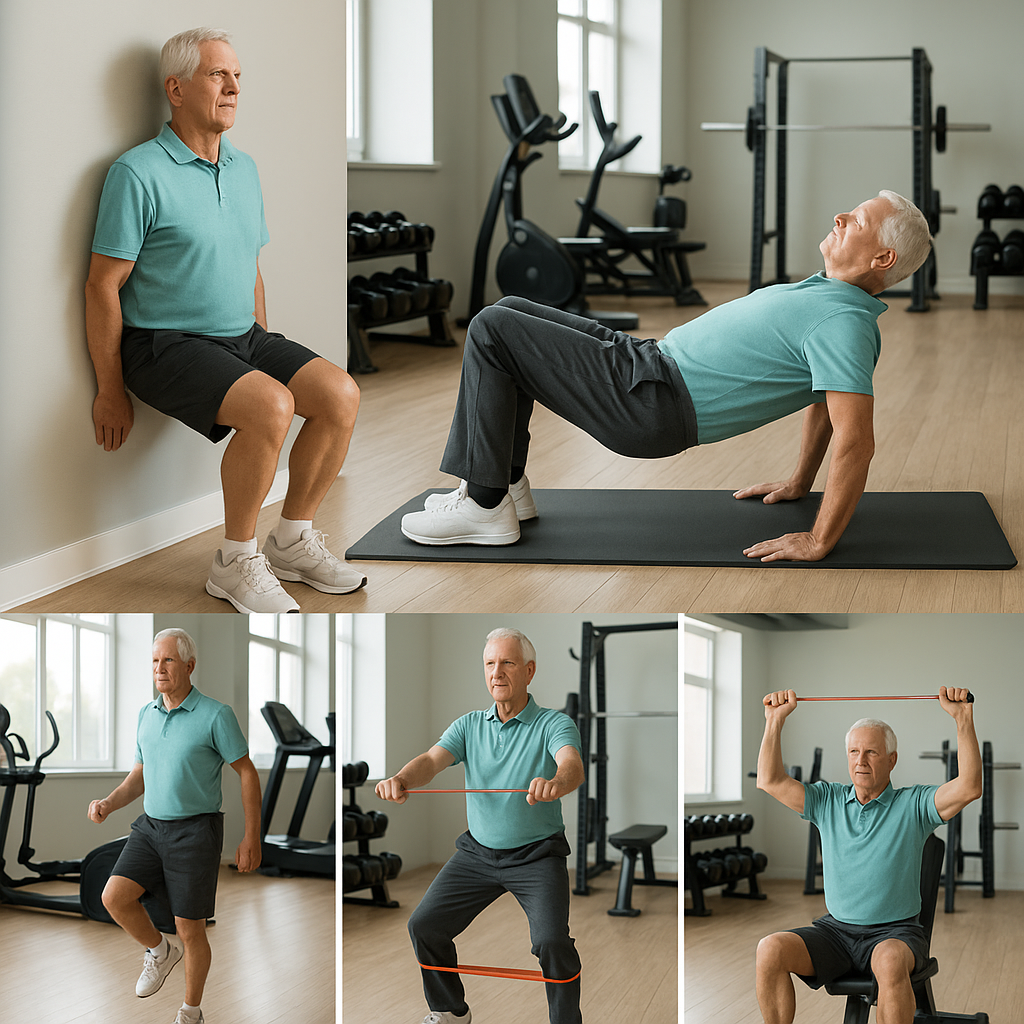
✔ Do this simple circuit 2–3 times per week:
Wall Sits – 20–30 seconds
Glute Bridges – 12–15 reps
Side Steps (Resistance Band) – 10 each direction
Standing Balance (1 Leg) – 20 seconds each
Light Dumbbell Shoulder Press – 10 reps
Band Pull-Aparts – 15 reps
This prevents back pain, helps maintain distance, and keeps your legs strong for spring golf.
5. Equipment Checkup: Winter Is the Best Time to Upgrade
Before spring rush is when senior golfers should check:
✔ Grips
If they’re shiny or slippery, replace them—big improvement for winter hands.
In cold weather, softer compression balls help seniors maintain speed and feel.
✔ Shoes
If your feet hurt, your swing suffers. Winter deals are excellent for new shoes.
✔ Putter Grip
A larger or stability-style grip can dramatically reduce wrist breakdown and yips. And why senior golfers are choosing solutions like LAB putters for senior golfers for stability and repeatability.
This is also a good time to test a lighter shaft or senior-flex shaft if distance has dropped.
6. Mental Game Refresh: The Off-Season Advantage
Winter is the perfect time to reset your mental approach.
Try:
Visualization practice — 5 minutes imagining perfect drives & putts.
Rewatching your best golf moments — rebuild confidence.
Journaling rounds from last season — find patterns to fix.
Choosing 2–3 goals for spring — keep them simple and specific.
A calmer, clearer golf mind pays off immediately when the season begins.
AI golf instruction is becoming one of the newest ways golfers can use artificial intelligence to improve their game. AI can already write an email, plan a vacation, answer questions, analyze photographs—and now it can even analyze your golf swing. But can it actually help you play better golf? That was the question I wanted…
How Tee Height and Ball Position Can Help Senior Golfers Launch It Higher, Find the Center of the Face, and Get More From Their Driver One of the easiest ways for senior golfers to gain more from the driver is to check driver tee height for senior golfers and ball position before making another swing…
Sometimes the best golf memories aren’t made on the golf course—they’re made afterward. 2-night golf getaways for senior golfers are one of the best ways to enjoy great golf, reconnect with friends, and recharge without spending a week away from home. Sometimes, the best golf memories aren’t made by shooting your lowest score—they’re made around…
If you still play November–February, adapt wisely:
swing at 80% to avoid strains
wear multiple thin layers (not one heavy coat)
warm hands before every swing
avoid hitting off frozen turf with irons
club up 1–2 clubs in cold air
take extra care on slippery slopes
Winter golf can be fun — but safety and comfort come first for senior golfers.
8. Build a “Spring-Ready” Plan
By February, you should create a simple spring checklist:
book a lesson for early-season tune-up
stretch daily for 1–2 weeks before first round
hit 40–50 range balls (not 100+)
schedule chiropractics or massage if needed
ease into full swings over 7–10 days
When the weather breaks, your body should already be primed—not shocked.
How Off-Season Planning Affects Your Equipment Too
One of the biggest surprises for senior golfers is how much equipment choices interact with off-season focus.
For example:
A slightly longer putter shaft can make a big difference if shoulder rotation has tightened over winter.
A club with a more balanced shaft can help a golfer with reduced hip rotation maintain rhythm.
Even grip size and shoe stability matter more when your body’s proprioception (awareness of movement) isn’t as sharp after a break.
That’s why an off-season plan isn’t just about physical drills and stretch routines — it’s about evaluating how your body interacts with your gear.
This is the same concept that drives smart equipment decisions in posts like club fitting for senior golfers and helps explain why many golfers see improvement in short game and confidence without drastic swing changes.
Your off-season can be the time where you take stock of:
how your body feels
what your gear demands of you
where your inconsistencies show up
how you can adapt your swing to your body — not force your body into your swing
This mindset shift — from chasing swing mechanics to understanding your body motion and equipment interaction — is what separates feeling stuck in April from being confident in May.
Perfect. This FAQ section is designed for Rank Math schema, senior-specific keywords, and to reinforce the mobility + equipment + planning theme of the post.
Add this at the very bottom of the Off-Season Golf Plan post, just before your conclusion or sign-off.
FAQ — Off-Season Golf Plan for Senior Golfers
What should senior golfers focus on during the off-season?
Senior golfers benefit most from focusing on mobility, balance, and short-game control during the off-season. Improving range of motion and stability often leads to better swings in the spring than spending time trying to change mechanics.
Is it important for senior golfers to practice their swing in winter?
Some light swing work can help, but most seniors see better results by improving flexibility, balance, and posture first. When your body moves more freely, your natural swing usually improves without adding new swing thoughts.
How can I tell if my body is limiting my golf swing?
Simple checks like the ROM tests for senior golfers can quickly show where shoulder, hip, or upper-back stiffness is affecting your turn, balance, and consistency.
Should senior golfers stretch during the winter months?
Yes. Gentle stretching and mobility work, like the routines in the Senior Golfer Stretch Guide, help keep joints moving and prevent stiffness from building up over the off-season.
Can equipment changes help during the off-season?
Absolutely. The off-season is a great time to evaluate whether your clubs, grips, shoes, and putter fit how your body moves today. This is often where club fitting for senior golfers becomes more about comfort and consistency than distance.
Why does my swing feel shorter after the winter break?
This is usually due to reduced shoulder and upper-back mobility. Without regular movement, those areas tighten up, making a full turn feel restricted when you return to golf.
Is putting practice useful during the off-season?
Very much so. Putting requires less physical strain and helps maintain feel and confidence. Many seniors find putting practice carries over into the season more than full swing work.
How often should I work on mobility during the off-season?
A few minutes a day is enough. Consistency matters more than intensity. Regular gentle movement keeps joints and muscles ready for the season ahead.
What is the biggest mistake senior golfers make in the winter?
Trying to fix their swing before understanding how their body moves. This often leads to frustration instead of improvement.
When should I start preparing for the season again?
About 4–6 weeks before you expect to play regularly. This gives your body time to regain mobility and confidence before you step back onto the course.
Final Word: Your Off-Season Is Your Opportunity
For senior golfers, the off-season isn’t a setback — it’s your secret weapon.
From November to February, your goal is simple:
Stay loose. Stay healthy. Stay sharp. Come into spring better than you ended the fall.
Most seniors lose flexibility, distance, and confidence during the winter… …but with the right plan, you’ll gain all three instead.
75%
🔔Want more senior-specific golf tips? Join the Senior-Golfers.com Newsletter and get practical advice, equipment insights, and bonus guides delivered monthly — no spam.
Allen is a seasoned golfer who has been playing the sport for over 50 years, mostly in the Northwest, and now calls Idaho home. Throughout his life, he has actively participated in various sports, including snowboarding and windsurfing in the Columbia Gorge. Allen passionately believes that “Golf is Life” and is dedicated to helping fellow senior golfers make the most of their senior years










Comments
[…] The off-season is a perfect time to work on this, as outlined in the Off-Season Golf Plan for Seniors. […]
[…] Off-Season Training Plan […]